That feeling of a thousand browser tabs open in your mind is all too common. Your heart races, your shoulders tense up, and your breath becomes a shallow, forgotten rhythm. What if you had a simple tool to close those tabs and restore calm in minutes? A focused breathing exercise script is that tool—a direct line to your body’s relaxation response, accessible anytime, anywhere.
This isn’t about emptying your mind or achieving a mystical state. It’s about giving your busy brain a single, grounding task: to follow the breath. By consciously guiding this fundamental life process, you can shift your entire physical and emotional state from stressed to centered.
At a Glance: Your Path to Calm
The Mind-Body Bridge: Understand why your breath is the fastest way to influence your stress levels and mental state.
A Universal 5-Minute Framework: Learn the foundational steps for any breathing practice, creating a reliable routine.
Three Proven Scripts: Get step-by-step instructions for the 5-5-5, 5-3-3, and 4-7-8 breathing techniques to find what works for you.
Navigating Common Hurdles: Discover simple, expert-backed tips for when your mind wanders or you feel you’re “not doing it right.”
Your First-Week Action Plan: A clear, manageable plan to turn these exercises into a consistent, peace-building habit.
Your Breath: The Built-In Remote Control for Your Nervous System
Think of your breath as a bridge connecting your mind and body. When you’re anxious or stressed, your nervous system kicks into “fight-or-flight” mode. Your breathing automatically becomes rapid and shallow, signaling danger to your brain—even if the “danger” is just a stressful email.
Conversely, when you are relaxed, your breath is deep, slow, and steady. This pattern tells your brain that you are safe, activating the parasympathetic nervous system, or your “rest-and-digest” state.
The magic is that this is a two-way street. You don’t have to wait to feel calm for your breath to slow down; you can consciously slow your breath to make yourself feel calm. Manipulating your breath is one of the most direct and powerful ways to regulate your emotional state. This is the core principle behind every effective breathing exercise.
From Chaos to Calm: A Simple 5-Minute Breathing Framework
Before diving into specific counts and timings, it helps to have a basic structure. This five-step framework can be applied to any breathing exercise, providing a reliable container for your practice. While this framework focuses purely on breath, a full breathing exercise script often fits within a larger practice. To see how this slots into a complete routine, you can Access your guided meditation.
Find Your Seat: Sit comfortably in a chair with your back straight but not stiff. Place your feet flat on the floor and let your hands rest gently on your lap. You can also lie down if that feels better.
Settle In: Gently close your eyes or lower your gaze. Take two or three deep, cleansing breaths—inhaling fully through your nose and exhaling with a soft sigh through your mouth. Feel your shoulders drop and release any obvious tension.
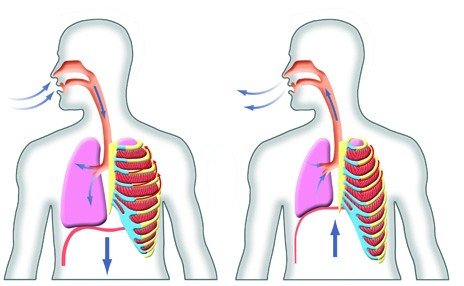
Tune into the Sensation: Return to your natural breath, breathing in and out through your nose. Don’t try to change it. Simply notice the physical sensations. Feel the cool air entering your nostrils and the warmer air as you exhale. Notice the gentle rise and fall of your chest and belly.
Gently Guide Your Focus: This is where you’ll introduce a specific breathing script (covered next). Your mind will wander. That’s what minds do. When you notice it has drifted, gently and without judgment, guide your attention back to the sensation of your breath.
Close with Intention: After a few minutes, let go of controlling the breath. Sit for a moment in the stillness you’ve created. When you’re ready, slowly open your eyes. Notice how you feel.
Three Powerful Breathing Scripts to Try Today
There is no single “best” breathing technique; the right one depends on your goal and what feels most comfortable for your body. Experiment with these three proven scripts to find your favorite.
Technique
Best For
Pacing
Key Benefit
5-5-5 (Box Breathing)
Increasing focus, managing moderate stress
Steady & Rhythmic
Creates a feeling of balance and control.
5-3-3 Breathing
Beginners, gentle relaxation
Soft & Easy
Lowers the barrier to entry, very calming.
4-7-8 (Relaxing Breath)
Deep relaxation, preparing for sleep
Slow & Intentional
Strongly activates the parasympathetic nervous system.
H3: The 5-5-5 Script: Box Breathing for Steady Focus
Used by Navy SEALs and athletes to stay calm under pressure, Box Breathing creates a steady, predictable rhythm that anchors the mind. Its balanced structure is excellent for regaining focus during a hectic workday. The Script:
Gently exhale all the air from your lungs.
Inhale through your nose for a slow count of 5.
Hold your breath at the top for a count of 5.
Exhale slowly through your mouth for a count of 5.
Hold the empty breath at the bottom for a count of 5.
Repeat the cycle for 2-5 minutes. A Practical Snippet:Sarah, a project manager, feels overwhelmed before a big presentation. She closes her office door, sets a 3-minute timer, and runs through the 5-5-5 script. The steady rhythm helps quiet her racing thoughts, allowing her to walk into the meeting feeling centered and in control.
H3: The 5-3-3 Script: A Gentle Start to Mindful Breathing
If the holds in Box Breathing feel too intense, the 5-3-3 technique is a softer, more accessible variation. It’s a wonderful entry point for beginners, providing a simple structure without creating any strain. The Script:
Gently exhale all your air.
Inhale slowly through your nose for a count of 5.
Hold your breath gently for a count of 3.
Exhale smoothly through your mouth for a count of 3.
Repeat the cycle for 3-5 minutes, allowing the rhythm to feel natural and easy. A Practical Snippet:Mark is new to meditation and finds his mind is too “busy.” He tries the 5-3-3 script. The short hold is manageable, and the gentle rhythm gives his mind just enough to focus on, helping him build confidence in his practice.
H3: The 4-7-8 Script: The “Relaxing Breath” for Deep Calm
Popularized by Dr. Andrew Weil, the 4-7-8 technique is a powerful natural tranquilizer for the nervous system. The extended exhale is key, as it stimulates the vagus nerve and ushers in deep relaxation. It’s particularly effective for easing into sleep or calming intense emotional moments. The Script:
Sit with your back straight. Place the tip of your tongue against the ridge of tissue just behind your upper front teeth and keep it there.
Exhale completely through your mouth, making a gentle “whoosh” sound.
Close your mouth and inhale quietly through your nose for a mental count of 4.
Hold your breath for a count of 7.
Exhale completely through your mouth, making the “whoosh” sound, for a count of 8.
This is one breath. Inhale again and repeat the cycle three more times for a total of four breaths. A Practical Snippet:Jenna often struggles to unwind after a long day, her mind replaying conversations and to-do lists. She practices four rounds of the 4-7-8 script while lying in bed. The deep, long exhale acts like a physiological reset, helping her body and mind transition toward sleep.
Common Roadblocks and How to Navigate Them
Starting a new practice often comes with a few questions. Here’s how to handle the most common challenges.
“My Mind Won’t Stop Wandering!”
This is the most common experience, and it is not a sign of failure. Your brain is a thought-generating machine. The goal is not to stop the thoughts but to change your relationship with them.
The Practice: When you notice your mind has drifted to a to-do list, a memory, or a worry, simply acknowledge it (“thinking”) and gently guide your focus back to the sensation of your breath. Every time you do this, you are strengthening your attention muscle. Pay special attention to the pause at the top of the inhale and the bottom of the exhale—these small gaps are natural resting places for your mind.
“Am I Doing It Right?”
If you are consciously breathing and paying attention, you are doing it right. There’s no perfect state to achieve. The benefits come from the act of practicing itself, not from achieving a flawless performance.
The Practice: Let go of expectations. Some days your practice will feel easy and calm; other days it will feel restless. Both are okay. The key is patience and consistency. Showing up for five minutes is the victory.
“I Feel Dizzy or Uncomfortable.”
This can happen, especially with techniques that involve holding your breath. It’s a sign to be more gentle.
The Practice: Never force your breath. If a 5-second hold feels like a strain, reduce it to 3 seconds. If you feel lightheaded, stop the controlled breathing and return to your natural rhythm for a few moments. Your comfort is the priority.
Quick Answers to Your Breathing Exercise Questions
What is the best breathing exercise for anxiety?
The 4-7-8 technique is often cited as highly effective for acute anxiety because the long exhale powerfully activates the body’s relaxation response. However, the most effective exercise is the one you will do consistently. Box Breathing (5-5-5) is also excellent for calming an anxious mind by providing structure and focus. How long should I do a breathing exercise?
Starting with just 3 to 5 minutes a day is incredibly effective. Consistency is far more important than duration. A five-minute daily practice will yield more benefits than one 30-minute session per week. Can I use a mantra with these scripts?
Absolutely. Using a simple mantra can provide an additional anchor for your mind. As you follow a script, you can mentally repeat phrases like, “Inhaling calm, exhaling stress” or simply “In” on the inhale and “Out” on the exhale. What’s the difference between a breathing exercise and meditation?
A breathing exercise is a type of meditation. Meditation is the broader practice of training attention and awareness. In breath-focused meditation (breathwork), the breath is used as the anchor—the object of your attention—to help stabilize the mind.
Your First Week: A Simple Plan for Building a Habit
The goal is not to master these techniques overnight but to build a sustainable habit. Try this simple plan to get started.
Days 1 & 2: Practice the 5-3-3 Script for 3 minutes once a day. Focus on gentleness and ease.
Days 3 & 4: Try the 5-5-5 Script for 3-5 minutes. Notice how the balanced rhythm makes you feel.
Days 5 & 6: Practice the 4-7-8 Script. Do only 4 full breath cycles, as it is quite powerful. Do this before bed or during a moment you need deep calm.
Day 7: Reflect. Which script felt the most natural? Which one did you enjoy the most? There is no wrong answer.
Choose the one that resonated with you and commit to practicing it for five minutes each day for the following week. You have the scripts, you have the framework, and you have the power to find peace, one conscious breath at a time. Your journey to inner calm has already begun.
I am a writer specializing in health and lifestyle, committed to delivering well-researched, engaging, and insightful content. With a keen eye for trends and a deep understanding of health, presenting and exploring topics ranging from nutrition and mental health to sustainable living. This writing is solely intended to educate, inspire, and empower readers to live a healthier, more balanced life.