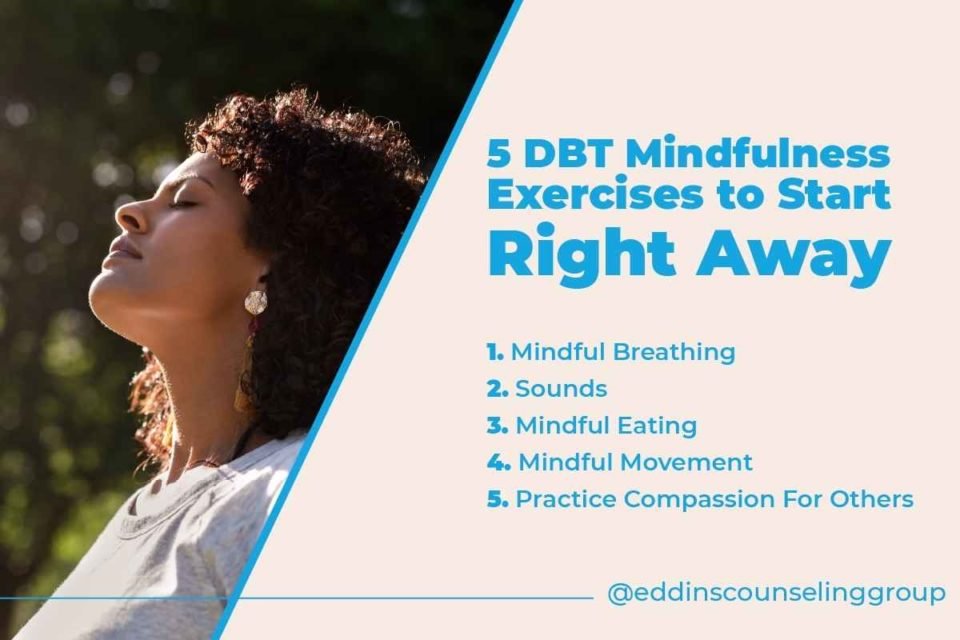
Your mind is racing, replaying a conversation from yesterday while simultaneously worrying about a deadline next week. The present moment—the feeling of the chair beneath you, the quiet hum of the room—is completely lost. This constant mental time travel is exhausting. The good news is that practical dbt mindfulness exercises are designed specifically to anchor you in the here and now, providing a powerful toolkit to reduce overwhelm and cultivate a sense of inner calm. They aren’t about emptying your mind; they’re about learning to observe it without getting swept away.
At a Glance: What You’ll Learn
The Core Framework: Understand the simple “What” and “How” skills that power every DBT mindfulness practice.
10 Actionable Exercises: Get step-by-step instructions for grounding exercises you can do anywhere, from your desk to your daily walk.
Choosing the Right Tool: Learn which exercise to use for specific situations, whether you’re feeling anxious, distracted, or physically tense.
Overcoming Common Hurdles: Find answers to frequent questions, like what to do when your mind won’t stop wandering.
A Practical Starting Point: Walk away with a clear, simple plan to integrate these skills into your life today.
The Blueprint: Understanding “What” and “How” Skills
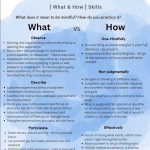
Before diving into specific exercises, it’s crucial to grasp the simple but profound framework behind them. In Dialectical Behavior Therapy (DBT), mindfulness is broken into two sets of skills: the “What” skills (what you do) and the “How” skills (the attitude you bring). The “What” Skills: The Actions of Mindfulness
These are the three core actions you’ll be practicing. Think of them as the verbs of mindfulness.
Observe: Simply notice sensations, thoughts, or feelings without pushing them away or clinging to them. It’s like watching clouds pass in the sky; you see them, but you aren’t the clouds.
Describe: Put words to what you observe. Silently label your experience, like “feeling of tension in shoulders” or “sound of a car passing.” This pulls you out of abstract worry and into concrete reality.
Participate: Throw yourself completely into the current moment’s activity. Whether you’re washing dishes or listening to a friend, you’re fully engaged, with your attention, mind, and body all in one place. The “How” Skills: The Mindset of Mindfulness
These three skills define the way you practice the “What” skills. They are the adverbs that ensure your practice is effective and compassionate.
Nonjudgmentally: See things as they are, without labeling them “good,” “bad,” “stupid,” or “unfair.” A thought is just a thought. A sensation is just a sensation. This is the hardest part for many, but it’s where freedom lies.
One-Mindfully: Do one thing at a time. When you are practicing a mindfulness exercise, just do that. Let go of the urge to multitask. Put your phone away, pause the TV, and give your full attention to the single task at hand.
Effectively: Focus on what works. This is the pragmatic heart of DBT. Instead of getting stuck on how things should be, you do what is necessary and effective in the current situation.
This elegant structure is the engine behind all DBT mindfulness. To explore this framework in greater detail, see our complete guide to Master DBT Mindfulness Skills. Now, let’s see how these skills come to life in practice.
Foundational Grounding Exercises to Anchor You in the Now
When you feel overwhelmed or dissociated, your first task is to reconnect with your body and your immediate environment. These exercises are your go-to tools for grounding yourself in physical reality.
1. The Five Senses (5-4-3-2-1) Drill
This is a classic DBT grounding technique designed to pull your mind out of an emotional spiral and back into the present moment by engaging all your senses.
Why it works: It forces your brain to switch from abstract worrying to concrete sensory input, which is very difficult to do at the same time. How to Do It:
Pause: Wherever you are, stop what you’re doing and take one deep breath.
Look (5): Acknowledge five things you can see. Look for small details: a crack on the wall, the way light hits a leaf, the texture of your desk.
Feel (4): Notice four things you can feel. The pressure of your feet on the floor, the fabric of your shirt on your skin, the cool surface of a table, the weight of your watch.
Listen (3): Tune in to three things you can hear. The distant traffic, the hum of a refrigerator, the sound of your own breathing.
Smell (2): Identify two things you can smell. The coffee on your desk, the scent of soap on your hands, the faint smell of rain outside.
Taste (1): Focus on one thing you can taste. The lingering flavor of your last meal, the taste of your own mouth, or take a sip of water and notice its taste and temperature.
Scenario Snippet: Alex felt a panic attack rising during a team meeting. Excusing himself to the restroom, he leaned against the wall and ran through the 5-4-3-2-1 drill. By the time he got to “smell,” his heart rate had slowed, and the intense feeling of dread had subsided enough for him to rejoin the meeting.
2. Mindful Breathing
This is the cornerstone of almost all mindfulness practices. Your breath is always with you, making it the perfect anchor for your attention.
Why it works: Focusing on the physical sensation of breathing activates the parasympathetic nervous system, which promotes a state of rest and calm. How to Do It:
Find a comfortable position, sitting or lying down. You don’t need to be perfectly straight, just comfortable.
Gently close your eyes or lower your gaze to a soft focus.
Bring your awareness to your breath. Don’t try to change it. Just notice it.
Focus on the sensation. Feel the air entering your nostrils, filling your lungs. Notice the gentle rise and fall of your chest or abdomen.
When your mind wanders (and it will), gently and nonjudgmentally guide your attention back to the sensation of breathing. Each time you bring it back, you’re strengthening your “mindfulness muscle.” Start with just one minute and build from there.
3. Body Scan Meditation
A body scan systematically brings awareness to different parts of your body, helping you notice sensations without judgment and release stored tension.
Why it works: It reconnects your mind and body, increases awareness of physical stress signals, and can be deeply relaxing. How to Do It:
Lie down comfortably on your back, with your arms at your sides.
Bring your attention to the toes of your left foot. Notice any sensations—warmth, coolness, tingling, pressure—without needing to change them.
Slowly, move your awareness up your left foot to the ankle, calf, and thigh. Spend 15-20 seconds on each area.
Repeat the process with your right leg, from the toes up.
Continue moving upward through your torso, back, and abdomen. Then move to your arms, hands, neck, and finally, your face and the top of your head.
If you notice tension in an area, you can imagine your breath flowing into that spot, helping to soften and release it on the exhale.
Integrating Mindfulness into Your Daily Routines
The real power of DBT mindfulness lies in weaving it into the fabric of your everyday life. You don’t need a special cushion or a silent room; you just need to bring intention to things you already do.
4. Mindful Eating
Transform a routine meal into a rich sensory experience.
Why it works: It slows you down, improves digestion, and helps you become more aware of your body’s hunger and fullness cues. How to Do It:
Before you eat, look at your food. Notice the colors, shapes, and textures. Take a moment to appreciate where it came from.
Smell your food. What aromas do you notice?
Take your first bite. Chew slowly, and try to identify all the different flavors. Notice the texture in your mouth.
Put your fork down between bites. Resist the urge to immediately prepare the next spoonful.
Minimize distractions. Turn off the TV, put your phone away, and just eat.
5. Mindful Walking
Use a simple walk—whether to the mailbox or around the block—as a mindfulness practice.
Why it works: The rhythmic, physical motion provides a steady anchor for your attention, making it a great option for those who find sitting still difficult. How to Do It:
Start walking at a natural, slightly slower pace.
Bring your focus to your feet. Feel the sensation of your foot lifting, moving through the air, and making contact with the ground. Notice the pressure shifting from heel to toe.
Expand your awareness. Notice the feeling of the air on your skin, the sounds around you, and the sights you pass—all without judgment.
If your mind wanders to your to-do list, just gently guide it back to the sensation of your feet on the ground.
6. Mindful Listening
Practice receiving sounds without analyzing or judging them.
Why it works: It trains you to be a more present observer, which can dramatically improve your focus and your relationships. How to Do It:
Sit quietly for a few minutes.
Open your awareness to the sounds around you. Let them come and go.
Notice the layers of sound. There might be a dominant sound (like a fan) and more subtle sounds (like birds outside or a clock ticking).
Resist the urge to label sounds as “good” (birdsong) or “bad” (traffic). Just hear them as pure sensation���vibrations in the air.
Active & Expressive Mindfulness Practices
These exercises involve gentle movement or creative engagement, offering another path to present-moment awareness.
7. Mindful Stretching
Connect with your body through gentle, intentional movement.
Why it works: It combines the physical benefits of stretching with the mental benefits of mindfulness, helping to release both physical and emotional tension. How to Do It:
Choose a few simple stretches (e.g., a neck roll, shoulder shrugs, or a forward fold).
Move into the first stretch slowly. As you do, inhale deeply.
As you hold the stretch, focus on the physical sensations. Where do you feel tightness? Where do you feel release?
Breathe into the tight areas. On the exhale, consciously let go of the tension.
Move to the next stretch with the same deliberate awareness.
8. Gratitude Journaling
This practice shifts your focus from what’s wrong to what’s right.
Why it works: According to research from UC Berkeley’s Greater Good Science Center, practicing gratitude is strongly and consistently associated with greater happiness. It trains your brain to notice the positive. How to Do It:
Each day, set aside five minutes.
Write down three specific things you are grateful for. Be detailed. Instead of “my family,” write “the way my partner made me coffee this morning.”
Reflect on why you are grateful for each item. How did it make you feel? What did it add to your day?
9. Mindful Coloring
Engaging in a simple, creative act can be a powerful form of meditation.
Why it works: The repetitive motion and focus on color and shape occupy the parts of the brain that spin anxious thoughts, allowing for a state of calm focus. How to Do It:
Choose a coloring book, preferably one with intricate patterns like mandalas.
Focus on the process, not the outcome. Pay attention to the physical sensation of the pencil on the paper, the sound it makes, and the simple decision of choosing the next color.
If you notice thoughts about “doing it right” or “making it look good,” just acknowledge them and return your focus to the movement of your hand.
10. Progressive Muscle Relaxation (PMR)
PMR involves systematically tensing and then releasing different muscle groups to achieve a deep state of relaxation.
Why it works: It makes you acutely aware of the difference between tension and relaxation, teaching you how to consciously release physical stress. How to Do It:
Find a quiet place to sit or lie down.
Start with your feet. Inhale and tense the muscles in your feet and toes, holding for 5-10 seconds.
Exhale and completely release the tension. Notice the feeling of relaxation that follows.
Repeat this tense-and-release sequence for different muscle groups, moving up your body: calves, thighs, glutes, abdomen, arms, hands, shoulders, and face.
Your Quick-Start Guide to DBT Mindfulness
Feeling overwhelmed by the options? Use this simple guide to pick the right exercise for the moment.
If you’re feeling…
Try this exercise first…
Because it…
Anxious or Panicked
Five Senses (5-4-3-2-1)
Immediately pulls you out of your head and into your environment.
Restless or Jittery
Mindful Walking
Channels excess energy into a focused, rhythmic activity.
Stressed & Tense
Progressive Muscle Relaxation
Directly targets and releases physical tension stored in the body.
Distracted at Work
Mindful Breathing (1 minute)
Quickly resets your focus without requiring you to leave your desk.
Overwhelmed by Negativity
Gratitude Journaling (3 items)
Actively shifts your mental focus toward positive experiences.
Unable to Sleep
Body Scan Meditation
Calms the nervous system and gently guides your mind away from racing thoughts.
Quick Answers to Common Questions
Q: My mind wanders constantly. Am I doing it wrong?
No, you’re doing it perfectly. The goal isn’t to have an empty mind; that’s impossible. The practice is the act of noticing your mind has wandered and gently, without judgment, bringing it back. Every time you do that, you’re succeeding.
Q: How long do I need to do these exercises for them to work?
You don’t need to meditate for an hour. Start with what feels manageable. One minute of mindful breathing is infinitely better than zero minutes. Five minutes of mindful walking during your lunch break can change the entire second half of your day. Consistency is more important than duration.
Q: Isn’t this just a distraction technique?
While these exercises can help you “get out of your head,” they are fundamentally different from distraction. Distraction is about avoiding or numbing a feeling. Mindfulness is about turning toward your present experience—including difficult feelings—with curiosity and acceptance, which ultimately reduces their power over you.
Q: Do I need special equipment or a quiet space?
Absolutely not. Many of the most powerful dbt mindfulness exercises, like the Five Senses drill or Mindful Breathing, are designed to be used “in the wild”—in a crowded grocery store, a stressful meeting, or while stuck in traffic. The world is your practice space.
Your Next Moment Is Your First Practice
You now have a full toolkit of practical, effective dbt mindfulness exercises. The key isn’t to master all of them at once but to find one or two that resonate with you and begin to integrate them into your life.
Don’t wait for the “perfect” quiet moment. Your next opportunity to practice is right now. As you finish reading this, take one mindful breath. Feel the air enter your lungs and then leave. Notice the pressure of your feet on the floor.
That’s it. You just practiced. Start there.
I am a writer specializing in health and lifestyle, committed to delivering well-researched, engaging, and insightful content. With a keen eye for trends and a deep understanding of health, presenting and exploring topics ranging from nutrition and mental health to sustainable living. This writing is solely intended to educate, inspire, and empower readers to live a healthier, more balanced life.