When you’re caught in an emotional storm, the search for solid ground often leads online. Typing “dbt mindfulness pdf” into a search bar feels like a plea for a lifeline—a clear, structured guide to pull you out of the chaos. These documents aren’t just collections of abstract ideas; they are practical blueprints for building a new relationship with your own mind, one skill at a time.
A good DBT mindfulness PDF serves as your personal workbook, translating the foundational principles of Dialectical Behavior Therapy into actionable steps for finding your center. It’s about moving from being a passenger on a runaway emotional train to becoming the calm, observant conductor.
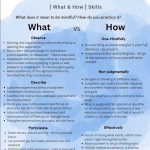
Deconstruct the Core Skills: Unpack the “What” skills (Observe, Describe, Participate) and “How” skills (Nonjudgmentally, One-Mindfully, Effectively) that are the engine of DBT mindfulness.
Put Theory into Practice: Get step-by-step instructions for using worksheets and exercises to build real-world emotional resilience.
Navigate Common Roadblocks: Understand why you might get stuck and learn how to move past common frustrations like self-judgment or a “busy mind.”
Integrate Skills into Daily Life: Discover simple ways to practice mindfulness beyond formal exercises, turning everyday moments into opportunities for growth.
Get Clear, Actionable Answers: Find direct responses to the most common questions people have when starting with DBT resources.
Beyond the Buzzword: What DBT Mindfulness Actually Aims to Do
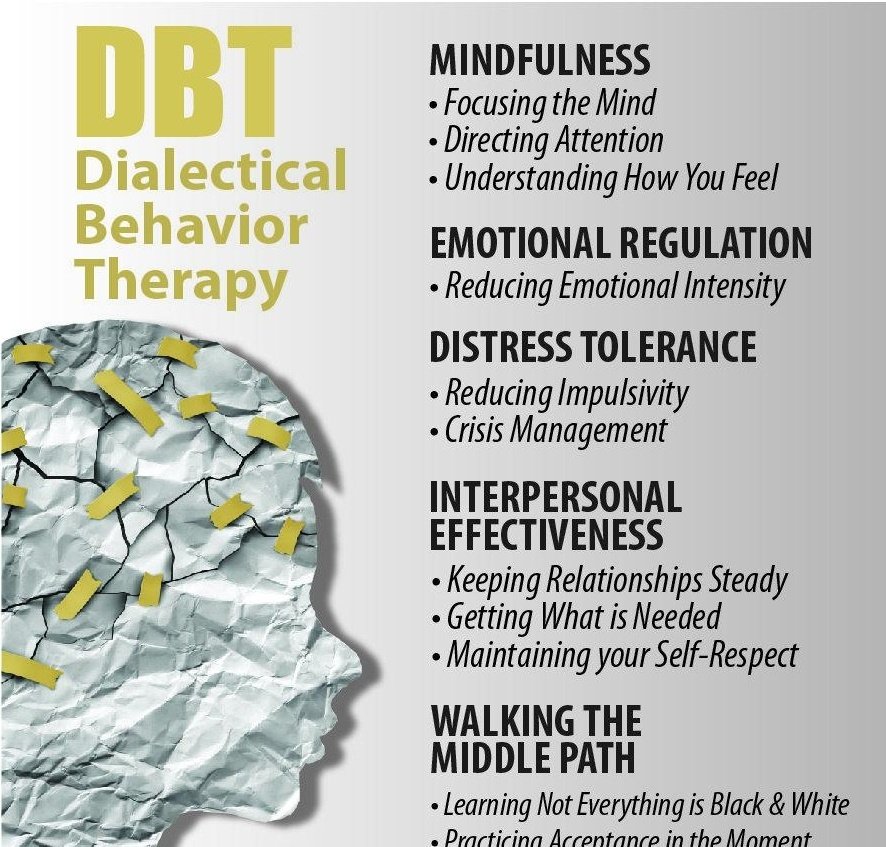
Developed by Dr. Marsha Linehan, Dialectical Behavior Therapy (DBT) was designed to help people manage overwhelming emotions and build a life they experience as worth living. At its heart is mindfulness, but it’s a specific, pragmatic form. DBT mindfulness isn’t about emptying your mind or achieving a state of constant bliss. It’s about learning to pay attention to the present moment on purpose, without judgment, so you can respond to life instead of just reacting to it.
This skill is the anchor for all other DBT work. By learning to observe your thoughts and feelings without getting entangled in them, you create a crucial pause. In that pause, you gain the freedom to choose a more skillful action. This practice is the cornerstone of the entire framework. To see how it connects to the other DBT modules like Distress Tolerance and Emotional Regulation, you can explore our complete guide to Master DBT Mindfulness Skills.
The Core Framework: Deconstructing a Typical DBT Mindfulness PDF
If you open a reputable DBT mindfulness PDF, like those from Linehan’s official training manuals, you’ll immediately notice a clear structure built around two sets of skills: the “What” skills and the “How” skills. Think of them as the actions you take and the attitude you bring to those actions.
The “What” Skills: The Actions of Mindfulness
These are the three core behaviors you actively practice. They tell you what to do to be mindful.
Skill
What It Means
A Practical Example
Observe
Simply noticing experiences as they come and go, without trying to grab onto them or push them away. This includes thoughts, physical sensations, emotions, and external sights and sounds.
You feel a familiar knot of anxiety in your stomach. Instead of immediately thinking, “Oh no, I’m getting anxious,” you just observe the physical sensation. You notice its location, its intensity, whether it changes-like a scientist studying a phenomenon.
Describe
Putting words to what you observe. This is a crucial step that separates you from your experience. Labeling a thought as a “thought” or an emotion as a “feeling” reminds you that it is not an absolute fact.
Following the observation of anxiety, you might silently say to yourself, “I am noticing the sensation of tightness in my stomach.” Or, “A thought is present that says ‘this will go badly’.” You’re not agreeing with the thought, just labeling its presence.
Participate
Throwing yourself completely into the current moment’s activity. It’s the act of becoming one with what you are doing, letting go of self-consciousness and distraction.
When you’re drinking a cup of tea, you fully engage. You notice the warmth of the mug, the scent of the steam, the taste on your tongue. You’re not simultaneously planning your day or rehashing a conversation; you are simply drinking tea.
The “How” Skills: The Mindset for Mindfulness
These skills describe the way you practice the “What” skills. They are the internal attitudes that make mindfulness effective.
Skill
What It Means
A Practical Example
Nonjudgmentally
Seeing things as they are, without adding a layer of evaluation (good/bad, right/wrong, fair/unfair). It’s about sticking to the facts of your experience.
You make a mistake at work. The judgmental thought is, “I’m so stupid, I always mess up.” The nonjudgmental approach is to observe: “I notice I sent the email to the wrong person. I feel a wave of embarrassment. Now, what is the next step to address this?”
One-Mindfully
Doing one thing at a time with your full attention. This skill is a powerful antidote to the stress of modern multitasking.
While listening to a friend, you put your phone away. You focus solely on their words, their tone, and their body language. You resist the urge to formulate your reply while they are still talking. You are one-mindfully listening.
Effectively
Focusing on what works to get you closer to your goals, rather than being driven by what is “right” or what you feel you “deserve.” It’s about choosing practicality over pride or passion in the moment.
You’re stuck in traffic and late for an appointment. The “right” response might feel like honking your horn and fuming about the injustice. The effective response is to take a deep breath, accept the situation, and perhaps call ahead to let them know you’ll be late. This reduces your stress and meets your goal of handling the situation responsibly.
Your Practical Playbook: Putting Your DBT Mindfulness PDF to Work
Reading about these skills is one thing; building them is another. A DBT mindfulness PDF is most useful when treated like a workout plan. Here’s how to get started.
Step 1: Start with a Simple “Observe” Exercise
This is the foundation. Don’t try to be perfect; just practice noticing.
Find a quiet spot where you won’t be interrupted for five minutes.
Set a timer. This frees you from checking the clock.
Sit comfortably and close your eyes or lower your gaze.
Bring your attention to your breath. Just observe it. Notice the air entering your nostrils, filling your lungs, and then leaving your body. Don’t try to control it or change it.
Your mind will wander. This is not a failure; it’s the nature of the mind. When you notice your attention has drifted to a thought, a sound, or a sensation, gently and nonjudgmentally describe it (“thinking”) and then guide your focus back to the breath.
Repeat this process of noticing and returning until the timer goes off. Every time you return your focus, you are doing a rep for your mindfulness muscle.
Step 2: Use a “Describe” Worksheet for Difficult Emotions
When an intense emotion hits, use a simple worksheet from a PDF (or just a notebook) to create space and understanding. Case Snippet: Alex felt a surge of anger after a critical comment from their boss. Instead of lashing out, they took a 5-minute break and mentally filled out a worksheet.
Prompting Event:My boss said my report was “adequate but not impressive.”
Emotion Name:Anger, Shame.
Physical Sensations I Observe:“Hot feeling in my face, clenched jaw, heart beating fast.”
Thoughts I Describe:“A thought that ‘he thinks I’m incompetent.’ A thought that ‘I worked so hard for nothing.'”
Urges I Notice:“Urge to write a defensive email. Urge to complain to a coworker.”
By simply describing the experience in this way, Alex didn’t make the anger disappear. But they did stop it from hijacking their behavior. They could then choose an effective next step instead of a reactive one.
Step 3: Integrate “Participate” into a Daily Routine
You don’t need to set aside an hour for this. Pick one small, routine activity and commit to doing it with full participation for a week.
Brushing Your Teeth: Feel the bristles on your gums. Notice the taste of the toothpaste. Hear the sound of the brush.
Washing a Dish: Feel the temperature of the water on your hands. See the soap bubbles form and pop. Smell the dish soap.
Walking to Your Car: Feel your feet on the pavement. Notice the air temperature on your skin. Look at the colors of the trees and buildings around you.
Common Sticking Points and How to Move Past Them
As you work with your DBT mindfulness PDF, you’ll inevitably run into challenges. This is normal. Here’s how to handle them.
“I Can’t Stop Judging Myself for Being Judgmental!”
This is the classic mindfulness trap. The goal isn’t to eliminate judgmental thoughts. The goal is to notice them nonjudgmentally. When the thought “I’m so bad at this” appears, your practice is to simply label it: “There’s a judgmental thought.” See it, acknowledge it, and let it float by without getting on its train.
“My Mind is Too Busy. I Can’t Focus One-Mindfully.”
Everyone’s mind is busy. A “successful” mindfulness practice isn’t one with a blank mind. It’s one where you gently and persistently return your focus, over and over again. Think of it like training a puppy. You don’t scold it for wandering off; you just gently lead it back to where you want it to be. Each return is a victory.
“This Feels Ineffective. My Problems are Still Here.”
Mindfulness doesn’t magically solve external problems. It changes your internal relationship to them so you can navigate them more wisely. Your difficult job is still there, but mindfulness gives you the clarity to decide whether to stay, leave, or set new boundaries. Your anxiety is still a part of you, but mindfulness helps you see it as a passing storm rather than the entire weather system.
Quick Answers to Your DBT Mindfulness PDF Questions
Q: What’s the best dbt mindfulness pdf to start with?
A: For the most authentic source, look for Marsha Linehan’s “DBT Skills Training Handouts and Worksheets.” It’s the clinical standard. For a more user-friendly, guided experience, “The DBT Skills Workbook” by Matthew McKay, Jeffrey C. Wood, and Jeffrey Brantley is an excellent resource that walks you through the exercises. Q: How long does it take to see results from practicing these skills?
A: You might notice small shifts—a moment of pause before reacting, a bit more self-awareness—within a week or two of consistent practice. According to DBT principles, lasting changes in emotional patterns are built over months, not days. Consistency is far more important than intensity. Q: Can I learn DBT mindfulness from a PDF alone?
A: A PDF is a powerful and essential tool for learning the language and structure of the skills. However, DBT was designed to be taught in a structured setting, like a skills group or with an individual therapist. This provides crucial feedback and support. Use a PDF as your guide and textbook, but consider seeking professional guidance to get the most benefit. Q: Is DBT mindfulness the same as regular meditation?
A: They share a common ancestor, but they have different aims. Many meditation practices aim for transcendence or spiritual insight. DBT mindfulness is a therapeutic tool specifically focused on increasing emotional regulation and reducing suffering in daily life. It’s about building the skill of awareness to make effective, value-driven choices.
Start with a Single Step
A DBT mindfulness PDF can feel like a lot of information at once. Don’t try to master everything overnight. The goal is to build a sustainable practice, not to achieve perfection.
Your first step is simple. For the next seven days, choose just one thing. Either commit to the five-minute “Observe” breathing exercise daily or pick one routine activity—like making your morning coffee—and practice the “Participate” skill with it. That’s it. Notice what happens. By taking that small, concrete action, you are moving from reading a PDF to living the skills. You are laying the first stone on the path to greater emotional balance.
I am a writer specializing in health and lifestyle, committed to delivering well-researched, engaging, and insightful content. With a keen eye for trends and a deep understanding of health, presenting and exploring topics ranging from nutrition and mental health to sustainable living. This writing is solely intended to educate, inspire, and empower readers to live a healthier, more balanced life.