That late-night search for a “dbt mindfulness skills pdf” often starts with a feeling of being hijacked by your own emotions. One moment you’re fine, and the next, a wave of anxiety, anger, or sadness has taken over, leaving you feeling out of control and exhausted. You know there has to be a better way than just white-knuckling it through, and that’s where Dialectical Behavior Therapy (DBT) mindfulness skills offer a concrete, actionable path forward.
These aren’t vague concepts about “being present.” They are specific, learnable tools designed to help you observe your inner world without getting swept away by it. Think of it as learning to watch the emotional weather instead of getting caught in the storm.
The Core Framework: Understand the crucial difference between DBT’s “What” skills (the actions) and “How” skills (the mindset).
From PDF to Practice: Get a step-by-step walkthrough for using a typical DBT worksheet to build real-world skills.
Navigate Common Pitfalls: Learn why “clearing your mind” isn’t the goal and how to handle feelings of frustration or boredom.
Actionable Starting Plan: A simple 3-day routine to begin practicing immediately without feeling overwhelmed.
Clarify Misconceptions: Get straight answers to how DBT mindfulness differs from standard meditation and how long it takes to feel a change.
The Foundation: Why Mindfulness Comes First in DBT
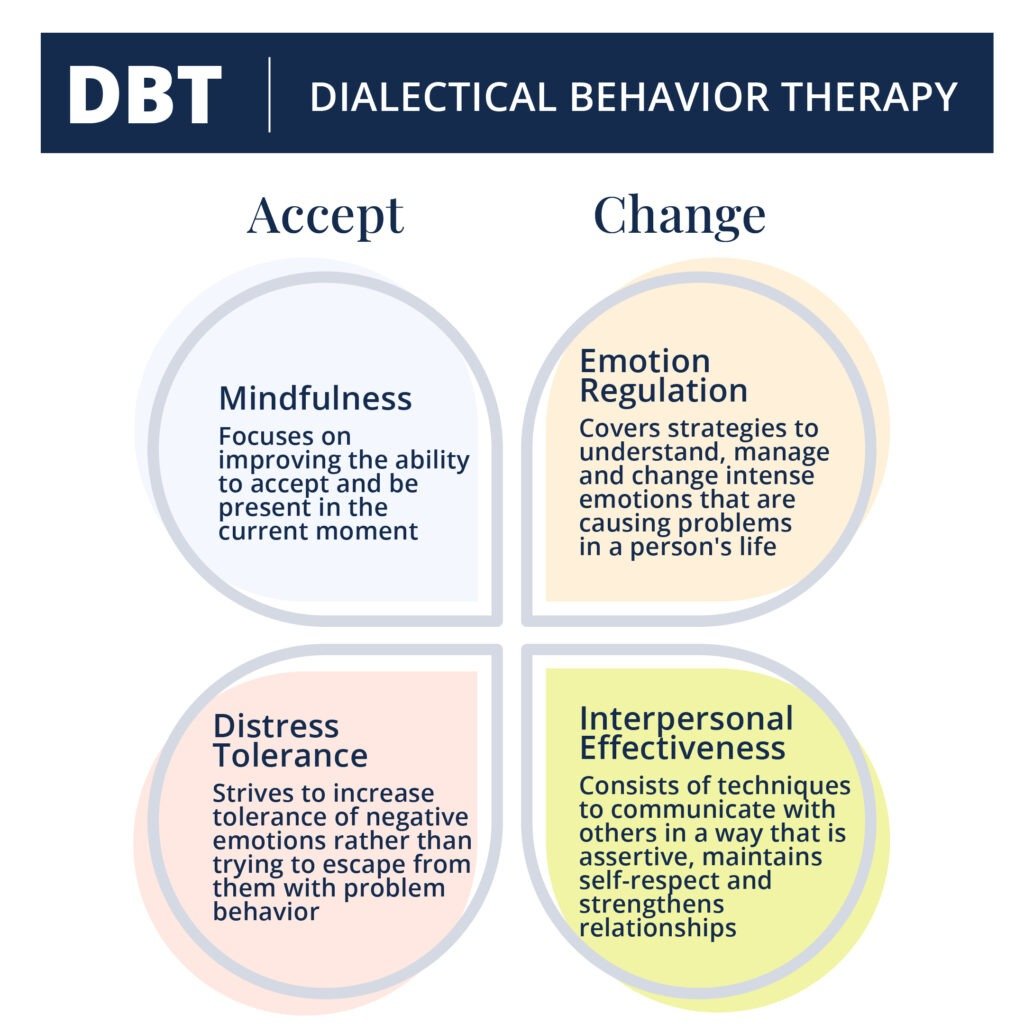
Before you can regulate an emotion, you have to be able to notice it without immediately reacting. This is the central purpose of DBT mindfulness. Developed by Dr. Marsha Linehan, DBT places mindfulness as the foundational module because every other skill—managing distress, navigating relationships, and regulating emotions—depends on it. Without awareness, you’re just reacting on autopilot.
These skills create a crucial pause between an emotional trigger and your response. It’s in that tiny space that you regain your power to choose. The tools outlined here are the bedrock of the entire therapy, forming the first module of the four core components you can explore in our complete guide to Master DBT Mindfulness Skills. By learning to observe, describe, and participate effectively, you build the muscle of self-awareness needed to make lasting change.
The Two Sides of DBT Mindfulness: What You Do and How You Do It
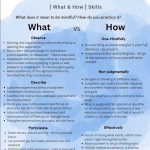
DBT brilliantly splits mindfulness into two categories: the “What” skills (the literal actions you take) and the “How” skills (the attitude or approach you bring to those actions). You need both for the practice to work.
The “What” Skills: Observe, Describe, and Participate
These three skills are the active verbs of mindfulness. They tell you what to do.
Observe: This is the act of simply noticing. Pay attention to sensations, thoughts, and feelings as they flow through you. The key is to notice without pushing anything away or clinging to it.
Mini-Example: You feel a familiar knot of anxiety in your stomach before a meeting. You simply bring your attention to the physical sensation—the tightness, the heat—without judging it or trying to force it to disappear. You are just gathering data.
Describe: This means putting words to your experience, but in a non-evaluative way. Labeling a feeling or thought can tame it, creating distance between you and the experience.
Mini-Example: Following the observation of the knot, you mentally label it: “This is the feeling of anxiety,” or “I am having the thought that I will mess up.” You’re not saying it’s bad, you’re just stating what is.
Participate: This is about throwing yourself completely into the present moment’s activity. Whether you’re washing dishes, listening to a friend, or walking, you engage with all your attention, becoming one with the action.
Mini-Example: During the meeting, instead of getting lost in anxious thoughts, you fully participate. You listen to the speaker’s words, notice the tone of their voice, and feel your feet on the floor. You are in the meeting, not just observing your fear about it.
The “How” Skills: Nonjudgmentally, One-Mindfully, and Effectively
These skills define the mindset you bring to the “What” skills. They are the adverbs that modify your actions.
Nonjudgmentally: This is the practice of seeing things as they are, without adding a layer of evaluation. You let go of labels like “good,” “bad,” “stupid,” or “unfair.” Judgments often pour gasoline on an emotional fire.
Mini-Example: You have the thought, “I’m so anxious, I’m weak.” The nonjudgmental stance simply notices: “A thought about being weak has appeared.” You see the judgment without buying into it as fact.
One-Mindfully: In a world of multitasking, this is revolutionary. It means doing one thing at a time and bringing your full attention to it. When your mind wanders (which it will), you gently guide it back.
Mini-Example: While practicing mindful breathing, your mind jumps to your to-do list. Instead of getting frustrated, you one-mindfully notice the distraction and gently return your focus to the sensation of your breath.
Effectively: This is the pragmatic core of DBT. It means doing what works to achieve your goals, rather than what feels “right” or “fair.” It’s about choosing skillful action over being driven by emotional intensity.
Mini-Example: You feel rage at a coworker who took credit for your work. The “righteous” response might be to yell at them. The effective response, aligned with your goal of keeping your job and maintaining a professional reputation, might be to calmly and privately address the issue with them or a manager later.
Your First Week with a DBT Mindfulness Worksheet
A dbt mindfulness skills pdf is useless if it just sits in your downloads folder. Here’s how to translate those pages into a real practice for emotional regulation. Most worksheets follow a similar structure: they prompt you to practice a skill and then reflect on it. The Scenario: Alex feels a surge of panic every evening around 8 PM, dreading the next day’s work. He decides to use a DBT mindfulness worksheet to practice the “Observe” and “Describe” skills.
Step 1: Choose a Specific, Low-Stakes Practice
Don’t start with your most intense trigger. Pick something manageable. For Alex, it’s not tackling the panic at its peak, but practicing for 5 minutes before it usually starts. A great starting point is Mindful Breathing.
Step 2: Set the Stage
Find a quiet place where you won’t be interrupted for 5-10 minutes. Turn off notifications. This communicates to your brain that this is intentional time.
Step 3: The Pre-Practice Check-In
Before you begin, rate the intensity of your target emotion on a scale of 1-10. This gives you a baseline to measure change.
Alex’s Log: “Feeling of dread: 6/10.”
Step 4: Engage the “What” and “How” Skills
Alex sits and focuses on his breath (Observe). He notices the air is cool on the inhale and warm on the exhale. His mind wanders to an email he has to send (Observation). He gently brings his attention back to his breath (One-Mindfully). He feels the panic begin to rise in his chest (Observe). He mentally labels it, “Chest is tight. Heart is beating faster” (Describe), without adding “Oh no, this is awful” (Nonjudgmentally).
Step 5: The Post-Practice Reflection (The Worksheet)
This is where the learning solidifies. Immediately after the practice, fill out your worksheet.
Here’s what a section of Alex’s completed worksheet might look like:
Prompt on Worksheet
Alex’s Entry
Date & Time:
Monday, 8:00 PM
Mindfulness Skill Practiced:
Observe & Describe (Breath & Body Scan)
What did you observe? (Senses, thoughts, emotions)
Felt coolness of breath. Tightness in chest. Thought about work email. Sensation of my feet on the floor.
Did you notice any judgments?
Yes. Had the thought, “I’m terrible at this, I can’t even focus for one minute.”
How did you handle distractions/judgments?
I labeled the thought as “judging” and returned my focus to my breath, just like the handout said.
Emotion Intensity (After):
Dread: 4/10. Feeling a little calmer.
By documenting this, Alex isn’t just “meditating”—he’s training his brain. He’s gathering evidence that he can, in fact, notice a difficult feeling without letting it take over completely.
Sidestepping Common Mindfulness Traps
As you begin, your mind will likely throw up some roadblocks. This is normal. Here’s how to handle them effectively.
“I Can’t Stop My Thoughts!”
This is the most common misconception. Mindfulness is not about stopping your thoughts; it’s about changing your relationship to them. The goal is to see them as passing clouds in the sky of your awareness, not as commands you must obey. When a thought appears, just notice it, label it (“thinking”), and let it float by.
“I Feel Like I’m Doing It Wrong.”
There is no “wrong” way to be mindful, only awareness and non-awareness. The moment you realize you’ve been distracted, you are already being mindful. That moment of noticing is the practice. Treat it as a success, not a failure. Gently guide your attention back without scolding yourself.
“This Feels Boring or Pointless.”
Especially at first, mindful breathing can feel incredibly boring. That’s okay! Your brain is used to constant stimulation. Connect the practice to your larger goal. As Dr. Linehan emphasizes, these skills are about building a “life worth living.” You are doing this boring exercise now so that you can have more freedom and control during moments of intense emotional pain later.
Frequently Asked Questions About DBT Mindfulness Practice
How is DBT mindfulness different from regular meditation?
While they overlap, DBT mindfulness is more targeted and skill-based. Traditional meditation often has spiritual goals or focuses on sustained concentration. DBT mindfulness is a psychoeducational tool specifically designed to help individuals with severe emotional dysregulation. It explicitly breaks down the “What” and “How” skills to give you a concrete framework for managing overwhelming emotions.
Can I learn these skills from just a dbt mindfulness skills pdf?
A PDF or workbook like McKay, Wood, and Brantley’s The DBT Skills Workbook can be an excellent starting point for building a foundational practice. For many, it’s enough to create meaningful change. However, for those with complex trauma, severe symptoms, or a history of self-destructive behavior, these skills are best learned within a comprehensive DBT program with a trained therapist who can provide guidance, validation, and coaching.
How long does it take to see results?
You might notice small shifts—like a moment of calm or a brief pause before reacting—within the first week. Substantial changes in emotional regulation patterns are a result of consistent practice over months. It’s a skill, like learning an instrument. You won’t play a symphony on day one, but with regular practice, you will make progress.
Your Starting Point for Calm and Clarity
Don’t try to master everything at once. The goal is to start small and build momentum. Here is a simple plan for your first three days, using just one daily activity you already do: drinking a cup of coffee or tea.
Day 1: Just Observe. For the first three sips of your drink, do nothing but observe. Notice the warmth of the mug, the smell of the coffee, the sensation of the liquid in your mouth. When your mind wanders, gently bring it back to the sensory experience.
Day 2: Add Describe. During your first three sips, add silent labels. Mentally say, “Warm.” “Slightly bitter.” “Smooth.” “Smell of coffee.” This anchors your attention.
Day 3: Add Nonjudgmentally. As you practice observing and describing, you might have a thought like, “This is silly” or “I’m not doing this right.” Notice that thought. Label it: “A judging thought has appeared.” Then, gently return your attention to the coffee. You see the judgment without getting tangled in it.
This simple exercise, practiced daily, is the first step toward building the mental muscle to handle much larger emotional waves. It’s not about the coffee; it’s about the practice of returning your attention, again and again, to the present moment. That is where your power lies.
I am a writer specializing in health and lifestyle, committed to delivering well-researched, engaging, and insightful content. With a keen eye for trends and a deep understanding of health, presenting and exploring topics ranging from nutrition and mental health to sustainable living. This writing is solely intended to educate, inspire, and empower readers to live a healthier, more balanced life.