Many therapists understand the theory behind mindfulness, yet hesitate to lead a client through a practice. This gap between knowing about mindfulness and feeling confident guiding it is precisely what high-quality mindfulness cognitive therapy courses are designed to bridge. They transform abstract concepts into tangible clinical skills, equipping you to move beyond discussing mindfulness to actively facilitating it in session.
At a Glance: What You’ll Gain
- A practical framework for understanding the core shift from a frantic ‘Doing Mode’ to an aware ‘Being Mode’.
- Step-by-step guidance on leading foundational MBCT exercises like the Bodyscan and Mindfulness of Breath.
- Clarity on the distinction between a personal mindfulness practice and the skills needed for clinical instruction.
- Key criteria for identifying a high-impact, experiential training program that respects your time.
- An immediate action plan for integrating these powerful techniques into your existing therapeutic work.
From Knowing ‘About’ to ‘Knowing How’
The most effective Mindfulness-Based Cognitive Therapy (MBCT) training isn’t a series of lectures; it’s a hands-on, experiential workshop. Think of it like a flight simulator for therapists. You can read every manual on aviation, but you won’t be ready to fly until you’ve spent time in the cockpit, handling the controls and responding to real-time feedback. Similarly, these courses immerse you in the very practices you’ll eventually teach.
This focus on direct experience is the heart of the methodology. You’ll practice the meditations yourself, engage in guided inquiry with peers, and feel firsthand the mind’s tendency to wander. This embodied understanding is crucial because you can’t guide someone through a landscape you’ve only seen on a map. This hands-on approach is central to the entire framework of MBCT Clinical Mindfulness Training, which aims to build practitioner confidence through direct experience. By sitting with your own discomfort, distraction, or moments of clarity, you develop the authentic presence needed to hold space for your clients’ experiences.
Mastering the Foundational Pillars of MBCT Practice
A reputable MBCT course moves beyond simple “relaxation techniques.” It provides a robust clinical framework for helping clients change their relationship with their thoughts and feelings. The curriculum is built on a few core pillars that you will not only learn but practice extensively.
Shifting from ‘Doing Mode’ to ‘Being Mode’
Much of our clients’ distress comes from being stuck in ‘Doing Mode’—a state of mind geared toward problem-solving, analyzing, and achieving goals. While essential for many tasks, it becomes counterproductive when applied to internal experiences like sadness or anxiety. Trying to “fix” or “solve” a feeling often amplifies it.
MBCT introduces ‘Being Mode,’ an intentional shift toward observing and allowing experiences to be as they are, without an immediate agenda to change them.
- Mini-Case Snippet: A client with recurrent depression describes being exhausted by the constant effort to “fight off” low moods. His therapist, trained in MBCT, introduces a short “mindfulness of breath” practice. The instruction isn’t to stop feeling sad, but simply to notice the physical sensation of his breath while the sadness is also present. This is his first taste of ‘Being Mode’—co-existing with a difficult emotion rather than battling it.
Training Attention: The ‘Muscle’ of Mindfulness
At its core, mindfulness is the practice of paying attention, on purpose, in the present moment, non-judgmentally. MBCT courses treat attention like a muscle that can be trained. The exercises are not about emptying the mind, which is a common misconception. They are about noticing where your attention has gone and gently, firmly guiding it back to a chosen anchor, like the breath or bodily sensations.
Each time you notice your mind has wandered and you guide it back, you are performing a “mental rep.” This strengthens your ability to consciously direct your focus, a skill you can then teach clients to help them disengage from cycles of rumination or worry.
Cultivating Non-Judgmental Awareness
This is perhaps the most subtle yet powerful component. Non-judgmental awareness doesn’t mean approving of everything or adopting a passive stance in life. It means observing your thoughts, feelings, and sensations without the second layer of criticism or commentary.
- In Practice: A client feels a surge of anxiety.
- Judgmental thought: “Ugh, here we go again. I’m so broken. I can’t even handle a simple meeting.” (This adds shame and fear to the initial anxiety).
- Non-judgmental observation: “I’m noticing a tightening in my chest and my thoughts are racing. This is anxiety.” (This simply names the experience, creating space for a more skillful response).
A good course gives you structured exercises to practice this stance yourself, so you can guide clients to see their thoughts as mental events rather than absolute truths.
Your Guide to Key Experiential Exercises
High-caliber mindfulness cognitive therapy courses will guide you through a set of foundational practices. You’ll learn them by doing them, and then you’ll break down the instructional language and clinical intention behind each one. Below is a look at what to expect and how these exercises translate to client work.
| Exercise | Core Purpose | Therapist’s Role in Guiding a Client |
|---|---|---|
| The Raisin Exercise | To demonstrate how much we miss when on “autopilot” and to introduce mindful, curious attention to a simple sensory experience. | You’ll use invitational language, guiding the client to notice the raisin’s texture, ridges, smell, and the cascade of sensations during chewing, modeling a sense of discovery. |
| Mindfulness of Breath | To provide a reliable “anchor” to the present moment, using the constant, rhythmic sensation of breathing. | Your role is to offer gentle reminders-“noticing the rise and fall,” “when the mind wanders, gently guiding it back”-while normalizing that the mind will wander. |
| Kabat-Zinn’s Bodyscan | To systematically reconnect with the body, fostering awareness of physical sensations without needing to change them. Crucial for anxiety and chronic pain. | You’ll lead a slow, deliberate scan from the toes to the head, encouraging an attitude of gentle curiosity toward all sensations: pleasant, unpleasant, and neutral. |
| Mindfulness of Sound | To practice an open, receptive awareness, allowing sensory input (sounds) to come and go without getting entangled in their meaning or source. | You’ll instruct the client to listen to the soundscape as pure vibration, noticing how sounds arise and pass away without needing to label or analyze them. |
Translating Your Training into Effective Client Work
Completing a course is the first step. The next is skillfully integrating these practices into your sessions. This requires more than just playing a recording; it demands a nuanced understanding of how to introduce, guide, and process the experience with a client.
The Art of Inquiry After an Exercise
Much of the therapeutic benefit of MBCT comes not from the meditation itself, but from the guided reflection—or “inquiry”—that follows. This is a collaborative, non-judgmental exploration of the client’s direct experience during the practice. The goal isn’t to find the “right” answer but to foster insight.
Potent inquiry questions you might practice in a training course include:
- “What did you notice during those few minutes?” (Open and non-leading)
- “Was there a moment you noticed your mind had wandered? What was that like?” (Normalizes mind-wandering as part of the process)
- “Did you notice any tendency to judge the experience or yourself?”
- “How did it feel to simply observe the breath, without needing to change it?”
Adapting MBCT for Different Clinical Populations
While MBCT was originally designed for depressive relapse, its principles are now applied much more broadly. A solid training program will touch on these applications:
- For Depression: The focus is on decentering from ruminative thought patterns. A client learns to see a thought like “I’m a failure” as a mental event, not a fact, creating a crucial moment of choice before spiraling downward.
- For Anxiety: The skills help clients stay present with the physical sensations of anxiety without escalating into catastrophic thinking. They learn to “surf the urge” of panic rather than being swept away by it.
- For Chronic Pain: The Bodyscan helps clients change their relationship with pain. Instead of tensing against the sensation, they learn to explore it with curiosity, often reducing the secondary layer of emotional suffering that accompanies the physical discomfort.
Getting Clear on MBCT Training
As you explore your options, certain questions inevitably arise. Here are direct answers to some of the most common ones.
Q: Do I need to be an expert meditator before taking a course?
A: Absolutely not. A well-designed course is for professionals who are often new to a formal practice. The core requirements are clinical experience and a willingness to be a beginner. The training is designed to build your personal and professional skills in parallel.
Q: What’s the difference between MBCT and MBSR (Mindfulness-Based Stress Reduction)?
A: They are close cousins but have different DNA. MBSR, developed by Jon Kabat-Zinn, has a broader focus on stress reduction for various populations. MBCT, developed by Segal, Williams, and Teasdale, specifically integrates tools from Cognitive Behavioral Therapy (CBT) to target the cognitive processes—like rumination and avoidance—that are known triggers for depressive relapse.
Q: Is a 3-day course really enough to start using these skills?
A: A 3-day immersive course, such as the model offered by the Association for Psychological Therapies (APT), provides the foundational skills, conceptual framework, and confidence to begin integrating these practices immediately. It’s an accredited, robust starting point. As Segal et al. (2013) emphasize in their seminal text, Mindfulness Based Cognitive Therapy for Depression, true mastery develops through ongoing personal practice and, ideally, supervision as you begin teaching.
Q: What does accreditation like ‘APT Level 1’ actually mean?
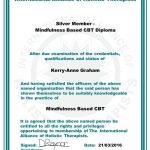
A: Accreditation signifies that you have completed a standardized, skills-based training from a recognized body. It provides a level of assurance to you, your clients, and potential employers that you have been trained to a specific level of competency. This credential often requires renewal (e.g., after three years), which encourages ongoing professional development and keeps your skills sharp.
How to Choose the Right Course and Get Started
Bringing MBCT into your work is a powerful professional step. It deepens your clinical toolkit and can also enrich your own well-being. To move forward, focus on a few key actions.
- Clarify Your Objective. First, decide your goal. Are you looking to add a few mindful exercises to your existing CBT practice, or do you eventually want to lead full 8-week MBCT groups? Knowing your endpoint helps you select the right intensity of training.
- Prioritize Experiential Learning. When reviewing course descriptions, look for an emphasis on “practice,” “experiential exercises,” and “guided meditation.” A high ratio of ‘doing’ to ‘listening’ is the hallmark of a program that builds real skills, not just theoretical knowledge.
- Vet the Instructors. Look for trainers who are not just academics but also experienced clinicians. The best guides are those who actively use MBCT in their own practice and can speak to the real-world challenges and successes of implementation.
- Commit to Your Own Practice. The single most important step after any mindfulness cognitive therapy course is to establish your own practice. You can only guide a client as far as you are willing to go yourself. Start small. Commit to ten minutes a day with a simple anchor, like the breath, and approach it with the same curiosity and non-judgment you hope to cultivate in your clients.

- Mindfulness Cognitive Therapy Courses Equip Therapists to Teach Clients - March 20, 2026
- MBCT Teacher Training Prepares Therapists for Certification Pathway - March 19, 2026
- Mbct Online Offers Practical Skills For Managing Stress And Mood - March 18, 2026