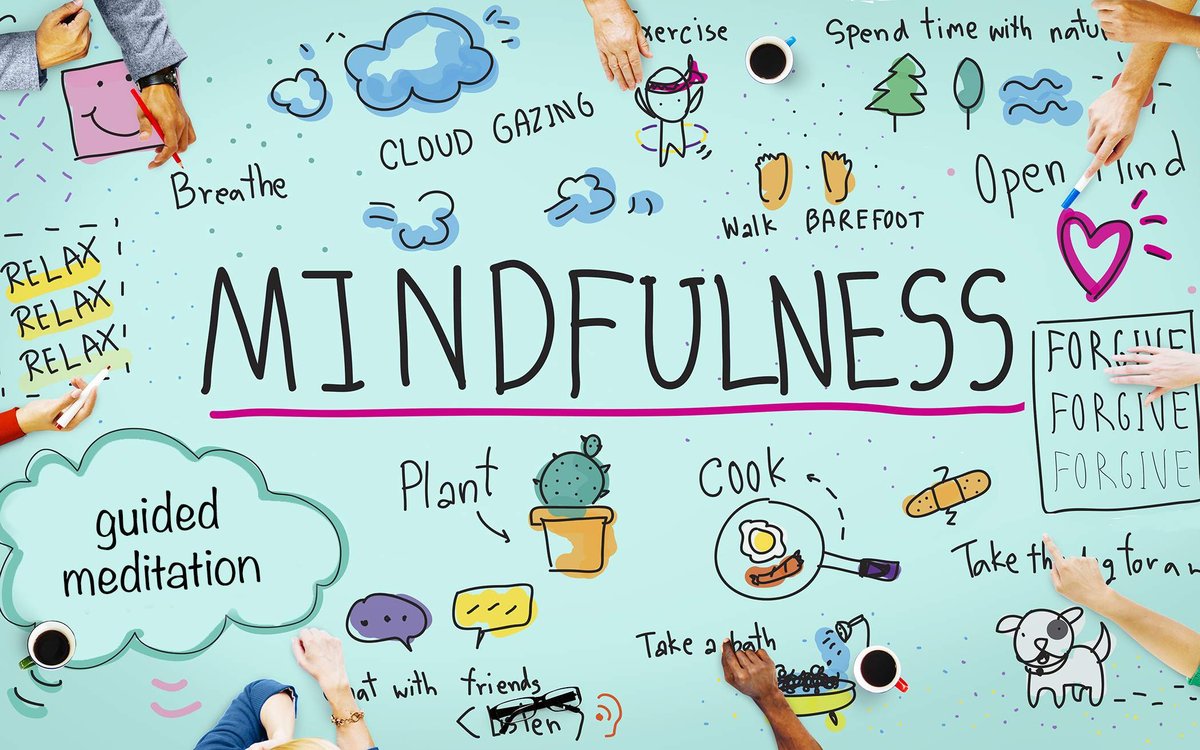
The energy in the room feels tight. You’re leading a group, and you can sense the distraction, the polite but surface-level engagement. Traditional icebreakers often fall flat, feeling more like a performance than a genuine connection. This is where mindfulness group games change the dynamic entirely. Instead of asking people to perform connection, you invite them to experience presence together, creating a foundation of calm and focus that feels authentic and deeply effective.
These aren’t just activities; they are structured invitations to play, to be curious, and to notice the present moment as a team. They lower the stakes of formal meditation while delivering many of the same benefits: reduced stress, heightened awareness, and a powerful sense of shared experience.
At a Glance: What You’ll Gain
- The ‘Why’ Behind the Play: Understand how framing mindfulness as a “game” bypasses resistance and makes presence feel accessible and fun.
- A Facilitator’s Playbook: Get step-by-step instructions for three powerful mindfulness group games you can use immediately in corporate, educational, or community settings.
- Mastering Group Dynamics: Learn specific facilitation techniques to set the right tone, manage different energy levels, and guide a meaningful debrief.
- Choosing with Confidence: A simple framework to help you select the perfect game based on your group’s specific needs—whether it’s to break the ice, build trust, or restore focus.
- Quick Answers: Find solutions to common challenges, like handling skeptical participants or adapting games for virtual environments.
Why ‘Games’? Unlocking the Power of Playful Presence
Let’s be clear: the goal isn’t to win. The “game” is simply a structure that invites participation in a lighthearted way. When we play, we naturally become more present. Think of a child absorbed in building with blocks or an athlete in the zone; they aren’t trying to be mindful, they just are. Mindfulness group games tap into this innate human capacity for focused play.
Framing an exercise as a game does three critical things:
- It Lowers the Stakes: The word “meditation” can feel intimidating, suggesting a required level of seriousness or skill. A “game” feels experimental and low-risk, giving everyone permission to be imperfect.
- It Fosters Curiosity: A game has a simple objective, which focuses the mind. The goal isn’t to “be good at mindfulness,” but to see if the group can count to 20 or synchronize its movements. This shifts the focus from internal judgment to external, shared curiosity.
- It Builds Collective Energy: Solitary mindfulness is powerful, but shared mindfulness creates a palpable group energy. Succeeding or “failing” (e.g., restarting a count) together builds resilience and a sense of camaraderie.
While there are many wonderful Activities for Group Connection & Calm that foster quiet reflection, transforming some of them into games adds a dynamic layer of interactive engagement that can be incredibly effective for team-building and focus.
The Facilitator’s Mindset: From Instructor to Guide
Your role as a facilitator is less about teaching and more about creating a safe container for exploration. The way you introduce and guide these games is everything.
Embrace Invitational Language:
- Instead of: “Close your eyes.”
- Try: “I invite you to close your eyes, or simply lower your gaze, whatever feels most comfortable for you.”
Focus on Process, Not Perfection:
Remind the group that the objective is just a focal point. The real experience is in the noticing. If the counting game restarts at one, it’s not a failure; it’s an opportunity to notice the feeling of surprise or laughter and begin again.
Be a Calm Anchor:
Speak slowly. Use pauses. Your calm, non-judgmental presence gives the group permission to relax. If a loud noise interrupts, don’t ignore it. Acknowledge it as part of the shared soundscape: “Notice that siren in the distance. And now, let’s gently bring our attention back to the breath.”
Case Snippet: Shifting a Skeptical Team
During a corporate retreat, a team of engineers was visibly skeptical about a “mindfulness session.” The facilitator, sensing the resistance, scrapped the planned Body Scan Meditation. Instead, she said, “Let’s try a quick listening experiment. The goal is to count to 10 as a group, but if two people talk at once, we start over. It’s harder than it sounds.” By framing it as a challenging “experiment” rather than a soft-skill exercise, she appealed to their problem-solving nature. The game sparked laughter, intense focus, and a surprisingly insightful conversation afterward about communication and team dynamics.
Your Practical Playbook: Three Essential Mindfulness Group Games
Here are three versatile games, complete with step-by-step instructions, facilitation cues, and debriefing questions to deepen the impact.
1. The Listening Game: Group Counting Challenge
This game sounds deceptively simple, but it’s a powerful exercise in group attunement, patience, and non-verbal listening.
- Best For: Cultivating group focus, developing patience, and highlighting unspoken communication patterns.
- Time: 5–10 minutes.
- Materials: None.
Step-by-Step Instructions:
- The Setup: Have the group sit comfortably in a circle. Explain the simple rules: “Our goal is to count as high as we can, starting from one. Anyone can say the next number at any time, but if two or more people speak at the same time, we gently start over at one.”
- Set the Target: For a new group, aim for 10. For a more established group, try 20 or higher.
- Begin the Game: Announce, “Let’s begin whenever you’re ready.” Then, as the facilitator, remain silent and hold the space.
- Navigate the Restarts: When an overlap inevitably happens, simply say, “One.” with a gentle, encouraging tone. Avoid any sense of failure or frustration. The restarts are a key part of the process.
- Conclude: Let the game run for a set time or until the goal is reached.
Facilitator’s Pro-Tips:
- Variations: For an advanced challenge, have the group try it with their eyes closed. This removes visual cues and forces an even deeper level of listening.
- Debrief Questions:
- “What did you notice in your body as the count got higher? Any tension, excitement, or hesitation?”
- “What was the experience of restarting like for you?”
- “What did you learn about our group’s rhythm or communication style?”
2. The Connection Game: Mirror Movement
This non-verbal paired exercise is a beautiful way to explore leadership, followership, and the profound focus that comes from attuning to another person.
- Best For: Building trust, enhancing non-verbal communication, and fostering deep, focused connection.
- Time: 7–12 minutes.
- Materials: None (optional: calm, instrumental music).
Step-by-Step Instructions:
- The Setup: Ask participants to find a partner and stand facing each other, about an arm’s length apart.
- Assign Roles: Ask them to decide who will be the “Leader” and who will be the “Mirror” for the first round.
- Provide Instructions: “Leaders, your role is to make slow, continuous, and simple movements. Think Tai Chi, not aerobics. Mirrors, your job is to reflect the Leader’s movements as precisely as possible, as if you are their reflection in a mirror.”
- Begin Round One: Start the first round, letting it run for about 2-3 minutes. Cue them to focus on their partner’s breath and subtle cues.
- Switch Roles: After the first round, gently signal for them to pause, and then have them switch roles for another 2-3 minutes.
- Conclude: Bring the group’s attention back to the room.
Facilitator’s Pro-Tips:
- Cueing: During the exercise, offer soft prompts like: “Notice the space between your hands.” or “Can you sync your breath with your partner’s?”
- Variations: For a more fluid experience, introduce a third step where there is no designated leader, and the pair must find a way to move together, co-creating the motion.
- Debrief Questions:
- “Which role was more comfortable for you: leading or mirroring? Why?”
- “Was there a moment when you felt perfectly in sync? What did that feel like?”
- “What happened when your mind wandered? How did you bring your focus back?”
3. The Awareness Game: Sound Map
This creative game turns the ambient noise we usually try to ignore into the main event. It sharpens listening skills and grounds participants in their immediate environment.
- Best For: Grounding a scattered or anxious group, expanding sensory awareness, and encouraging a non-judgmental perspective.
- Time: 10–15 minutes.
- Materials: A piece of paper and a pen/pencil for each participant.
Step-by-Step Instructions:
- The Setup: Hand out paper and pens. Ask participants to find a comfortable seated position.
- The Listening Phase: “I invite you to close your eyes for the next two minutes. Your only task is to listen. Notice all the sounds around you—the close sounds, the distant sounds, the loud ones, the quiet ones. Don’t label them as ‘good’ or ‘bad,’ just notice them.”
- The Mapping Phase: After two minutes, ask them to gently open their eyes. “Now, take your pen and make a small ‘X’ in the center of your paper to represent you. Based on what you heard, create a map. Draw a symbol for each sound, placing it where you perceived it coming from—up, down, far away, or close by.”
- The Sharing Phase: Give them a few minutes to draw. Then, invite them to share their maps in pairs or small groups of three.
- Group Debrief: Bring the full group back together for a brief discussion.
Facilitator’s Pro-Tips:
- Frame Distractions as Data: Before you begin, explicitly state that all sounds are part of the game. The hum of the projector, a cough, a car horn outside—they are all valid sounds to be mapped. This removes the pressure to find a “perfectly quiet” space.
- Debrief Questions:
- “What sound on your map surprised you the most?”
- “Did you notice sounds you typically tune out?”
- “How did it feel to just listen without needing to react or judge the sounds?”
How to Choose the Right Game for Your Group
Not every game fits every situation. Use this simple guide to match the activity to your group’s needs and energy level.
| If Your Group’s Goal Is… | The Best Game Choice Is… | Why It Works |
|---|---|---|
| To break the ice & boost energy | Mindful Freeze Dance | Physical, low-stakes, and playful. Generates laughter and shared vulnerability quickly. |
| To develop deep listening skills | Group Counting Challenge | Demands intense focus on the collective group rhythm, not just individual voices. |
| To foster trust & connection | Mirror Movement / Blindfold Walk | Builds non-verbal attunement and requires vulnerability in a safe, structured way. |
| To ground a scattered group | Sound Map / Five Senses | Anchors attention in the immediate sensory environment, calming the nervous system. |
Quick Answers to Common Concerns
Q: What if my group is skeptical or thinks this is “too weird”?
A: Acknowledge their skepticism and frame the activity with practical benefits. Say, “This might feel a little different, but it’s a powerful way to practice focus. Let’s just try it for three minutes as an experiment.” Start with a very low-risk, task-oriented game like the Group Counting Challenge or a simple breathing exercise. Never force participation; always make it an invitation.
Q: How do I handle someone who is chatty or disruptive?
A: Avoid singling them out. Address the entire group with a gentle reminder. For instance, “Let’s see if we can all bring our focus back to the silence in the room for our next attempt.” If the behavior persists and is genuinely disruptive, address it privately and with curiosity during a break, rather than confrontationally.
Q: Can mindfulness group games be adapted for virtual meetings?
A: Absolutely! The Group Counting Challenge works perfectly on a video call (with the added challenge of internet lag!). For a Sound Map, have everyone map their own physical environment and then share their screen or describe what they heard. You can even do a version of Mirror Movement by having partners mirror only hand and upper body movements on camera.
Q: How long should these games last?
A: Shorter is often better, especially when introducing a group to these concepts. Aim for 5-7 minutes for the game itself, followed by a 3-5 minute debrief. You can always extend the time if the group is deeply engaged. The key is to end while the energy is still high, leaving them wanting more.
Your First Step: Lead a Micro-Game Today
You don’t need a formal workshop to start. The next time you’re in a meeting and the energy feels low or scattered, try this 60-second reset.
Say to the group: “Before we dive in, let’s take just one minute to land in the room. Wherever you are, I invite you to silently notice three things your eyes can see… now notice two things you can physically feel, like the chair supporting you or your feet on the floor… and finally, notice one sound you can hear.”
Pause. Take a breath. Then continue the meeting.
That’s it. You’ve just successfully led one of the most effective mindfulness group games. You created a shared moment of presence, calmed the collective nervous system, and set the stage for a more focused and connected conversation. The power isn’t in complexity; it’s in the simple, shared act of paying attention, together.

- Month Long Meditation Retreat Cultivates Deep Mindfulness and Self-Love - August 9, 2026
- Month Long Spiritual Retreats Offer Deep Inner Transformation - August 8, 2026
- Month Long Retreat Offers Profound Transformation and Self-Discovery - August 7, 2026