For the bigger picture and full context, make sure you read our main guide on Fun Mindfulness Activities for Groups to Boost Connection and Calm.
Leading a group can feel like trying to tune a dozen different instruments at once, especially when stress and distraction are high. Purpose-driven dbt mindfulness activities for groups offer a powerful way to bring everyone into the same key, moving beyond simple relaxation to build tangible skills for focus and emotional balance. These aren’t just feel-good exercises; they are structured practices from Dialectical Behavior Therapy (DBT) designed to train the mind to stay present, observe without judgment, and participate fully in the moment.
The goal is to equip your group with tools they can use not just during the session, but in the middle of a chaotic workday or a difficult conversation. Let’s explore how to facilitate these activities effectively to foster genuine calm and connection.
At a glance: What you’ll find inside
- A clear breakdown of DBT’s core “What” and “How” mindfulness skills.
- Step-by-step instructions for 7 powerful, group-ready DBT mindfulness exercises.
- Practical tips for facilitators on how to guide, adapt, and troubleshoot activities.
- A quick guide to choosing the right exercise for your group’s specific needs.
- Answers to common questions about using DBT-informed practices in a group setting.
The DBT Approach: Mindfulness with a Purpose
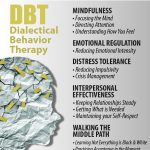
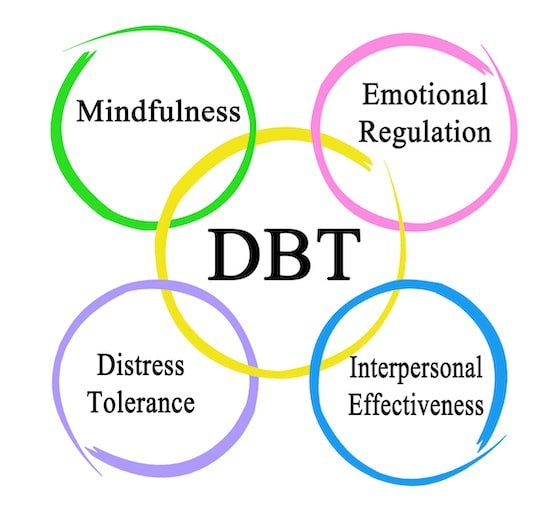
Before diving into the activities, it’s crucial to understand why DBT mindfulness is so effective. Developed by Dr. Marsha Linehan, Dialectical Behavior Therapy is a type of cognitive-behavioral therapy that helps people build skills to manage intense emotions and improve relationships. Mindfulness is the foundational module of DBT—the bedrock upon which all other skills (Distress Tolerance, Emotion Regulation, and Interpersonal Effectiveness) are built.
DBT breaks mindfulness down into two sets of practical skills:
- The “What” Skills (What you do): These are the core actions of mindfulness.
- Observe: Simply notice your experience—sensations, thoughts, feelings—without getting stuck on them. Imagine them as clouds passing in the sky.
- Describe: Put words to what you observe. Use factual, non-judgmental language (e.g., “I feel a tightening in my chest” instead of “I’m having a horrible anxiety attack”).
- Participate: Throw yourself completely into the current moment. Lose your sense of self-consciousness and become one with the activity.
- The “How” Skills (How you do it): These skills guide the attitude you bring to the “What” skills.
- Non-Judgmentally: See things as they are, without labeling them as “good” or “bad.” Acknowledge the facts without adding a layer of evaluation.
- One-Mindfully: Do one thing at a time. When your mind wanders (and it will), gently bring it back to your single point of focus.
- Effectively: Do what works. Focus on achieving your goals in the current situation, rather than being “right” or letting emotions derail you.
These skills provide a clear, actionable framework. While many general exercises can foster mindfulness, DBT activities are specifically designed to practice these six skills directly. For a look at other exercises that can complement this structured approach, you can Explore fun group mindfulness activities that focus broadly on connection and calm.
7 Core DBT Mindfulness Activities for Your Group
Here are practical, step-by-step guides for facilitating some of the most effective DBT mindfulness exercises.
1. The Mindful Grape (or Raisin) Exercise
This classic exercise is a perfect introduction to the “Observe” and “Participate” skills, using a simple object to engage all five senses.
- Core Skill(s): Observe, Describe, Participate, One-Mindfully.
- Best For: Introducing mindfulness, grounding a distracted group, practicing detailed observation.
How to lead it:
- Distribute: Give each person one grape or raisin. Ask them not to eat it yet.
- Seeing: Instruct them to look at the grape as if they’ve never seen one before. Guide them with questions: “Notice its color, the texture of its skin, the way light reflects off of it. See the small stem connection.”
- Touching: Ask them to close their eyes and feel the grape between their fingers. “What is the temperature? Is the skin smooth or wrinkled? Is it firm or soft?”
- Hearing: Have them hold the grape to their ear and roll it between their fingers. “Can you hear any sound, however faint?”
- Smelling: Instruct them to hold the grape under their nose and inhale. “What scents do you notice? Is it sweet, earthy, or something else?”
- Tasting: Finally, guide them to slowly place the grape in their mouth without chewing. “Notice the sensations on your tongue. Now, take one slow bite. What happens? Notice the burst of flavor and texture. Chew slowly, paying attention to every sensation until you swallow.”
- Debrief: Ask the group to share what they noticed. How was that different from how they normally eat?
Facilitator’s Tip: Some participants may giggle or feel silly at first. Acknowledge this with a smile and gently encourage them to lean into the experience. The goal isn’t to love the grape, but simply to notice it fully.
2. The Five Senses Grounding Exercise
A go-to skill for pulling a group back from anxious thoughts or overwhelm and anchoring them in the present moment. It’s quick, discreet, and highly effective.
- Core Skill(s): Observe, Describe.
- Best For: Managing anxiety, refocusing after a difficult topic, grounding in a crisis.
How to lead it:
- Invitation: Ask everyone to get comfortable and take a gentle breath.
- Guide the Senses: Lead them through the following prompts, pausing after each one:
- “First, notice five things you can see around you. Silently name them to yourself. It could be a color, an object, a shadow.”
- “Next, bring your awareness to four things you can hear. Listen for sounds both near and far, loud and soft.”
- “Now, notice three things you can feel. It might be the chair supporting you, the texture of your clothes, or the temperature of the air on your skin.”
- “Tune into your sense of smell. What are two things you can smell right now? If you can’t smell anything, just notice the neutral scent of the air.”
- “Finally, notice one thing you can taste. It could be the lingering taste of coffee, or simply the natural taste of your own mouth.”
- Closing: End with a final deep breath. Ask if anyone would like to share what they observed.
3. Mindful Listening to Music
This activity hones the skill of “One-Mindfully” by using music as a single point of focus, helping participants practice letting go of distracting thoughts.
- Core Skill(s): One-Mindfully, Observe, Participate.
- Best For: Practicing sustained focus, exploring non-judgment of sounds.
How to lead it:
- Select Music: Choose a piece of instrumental music without lyrics, as words can be distracting. Classical, ambient, or instrumental jazz works well. Aim for a 3-5 minute piece.
- Set the Stage: Ask the group to find a comfortable position, close their eyes if they wish, and set the intention to simply listen.
- Guide the Listening: Play the music. Instruct them: “Your only job is to listen. When your mind wanders to thoughts, plans, or worries, gently notice that it has wandered and then guide it back to the sound of the music. Don’t judge yourself for getting distracted; just return to the sound, again and again.”
- Deepen the Observation (Optional): You can add prompts like, “Now, try to isolate just one instrument. Follow the sound of the piano,” or “Notice the rhythm. See if you can feel it in your body.”
- Debrief: Discuss the experience. Was it difficult to stay focused? What did they notice about the music that they might have missed otherwise?
4. Body Scan Meditation
The body scan builds interoceptive awareness—the ability to sense internal body signals. It’s a powerful way to practice observing sensations without needing to change or judge them.
- Core Skill(s): Observe, Non-Judgmentally.
- Best For: Reducing physical tension, connecting mind and body, practicing acceptance of physical sensations.
How to lead it:
- Get Comfortable: Have participants lie down or sit in a relaxed, supported posture.
- Begin the Scan: Start by bringing awareness to the toes of the left foot. “Without moving them, just notice any sensations present. Tingling, warmth, pressure, or maybe nothing at all. There’s no right or wrong thing to feel.”
- Move Systematically: Slowly guide their attention up the body, part by part: the sole of the foot, the heel, the ankle, the lower leg, the knee, and so on. Move through both legs, the torso, arms, hands, neck, and face.
- Reinforce Non-Judgment: Continually remind them to just observe whatever is there. If they notice pain or tension, the instruction is not to fix it, but simply to “breathe into it,” acknowledging the sensation with curiosity.
- Closing: Once you reach the top of the head, guide them to feel their body as a whole, breathing. Gently bring them back to the room.
Case Snippet: In a corporate wellness group, a manager named Sarah found the body scan incredibly difficult, noticing intense tension in her shoulders. Her initial instinct was to fight it. The facilitator coached her to “just notice the tension, observe its shape and temperature, without needing it to go away.” Over several sessions, this non-judgmental observation allowed the tension to soften on its own, a breakthrough she later applied to stressful meetings.
5. Mindful Seeing
This exercise challenges our tendency to automatically label and categorize what we see, inviting us to look with “beginner’s mind.”
- Core Skill(s): Observe, Describe, Non-Judgmentally.
- Best For: Cultivating curiosity, breaking habitual thought patterns, finding novelty in the everyday.
How to lead it:
- Choose an Object: This can be a natural object brought into the room (a leaf, a stone, a flower) or something already present (a pattern on the floor, a chair).
- Instruct the Gaze: Ask participants to rest their gaze on the object.
- Guide Observation: Prompt them to see beyond the label. “Instead of ‘leaf,’ notice the intricate network of veins. See the subtle variations in color. Observe its edges—are they smooth or jagged? Notice the play of light and shadow across its surface.”
- Encourage Fresh Perception: Remind them to let go of what they know about the object and focus only on the raw visual data their eyes are taking in.
- Share: Ask participants to describe what they saw that they had never noticed before.
6. The Three-Minute Breathing Space
This is a powerful “mini-meditation” that can be used to reset focus and awareness during a long meeting or workshop. It has three distinct steps.
- Core Skill(s): Observe, One-Mindfully.
- Best For: A quick reset, bridging between different topics, a transition tool.
How to lead it:
- Step 1: Acknowledge (1 minute): Ask the group to check in with themselves. “What is your experience right now? What thoughts are going through your mind? What feelings are present? What body sensations are you aware of?” The key is to acknowledge without judgment.
- Step 2: Gather (1 minute): Gently redirect their full attention to the physical sensations of the breath. “Focus on the feeling of the breath in your belly or at your nostrils. Use the breath as an anchor to the present moment.”
- Step 3: Expand (1 minute): Expand the field of awareness around the breath. “Feel the breath in the body as a whole. Now expand your awareness to include the entire room, holding your awareness with a spacious, gentle perspective.”
7. Mindful Walking
This activity takes mindfulness off the cushion and into movement, practicing awareness while engaged in a simple, everyday activity.
- Core Skill(s): Participate, Observe, One-Mindfully.
- Best For: Groups that struggle with sitting still, connecting with the physical environment, practicing mindfulness in action.
How to lead it:
- Find a Space: Use a hallway, a large room, or an outdoor path.
- Instruct the Walk: Ask participants to walk at a slow, natural pace.
- Focus on Feet: Guide their attention to the physical sensations of walking. “Notice the feeling of your foot lifting off the floor. Feel it moving through the air. Notice the sensation of your heel connecting with the ground, then the ball of your foot, then your toes. Feel the transfer of weight.”
- Expand Awareness: Once they have the rhythm, you can invite them to expand their awareness to include the feeling of the air on their skin, the sounds around them, and what they see, all while maintaining the anchor of the walking sensation.
- Maintain One-Mindfulness: As always, remind them that when the mind wanders, they should gently guide it back to the sensation of walking.
Practical Playbook: Choosing and Structuring Your Session
Knowing the activities is one thing; using them effectively is another.
| Goal for the Group | Recommended DBT Activity | Why It Works |
|---|---|---|
| Grounding & Anxiety Reduction | 5 Senses Exercise, Body Scan | Anchors the group in the physical present, away from racing thoughts. |
| Improving Focus & Concentration | Mindful Listening to Music, Mindful Walking | Trains the “attentional muscle” by providing a single point of focus. |
| Introducing Mindfulness Concepts | Mindful Grape Exercise, Mindful Seeing | Uses a tangible object to make abstract concepts like “observe” concrete. |
| Quick Reset or Transition | Three-Minute Breathing Space | Provides a structured, brief, and effective mental break. |
| Practicing Non-Judgment | Body Scan, Mindful Seeing | Encourages observing “what is” without layering on good/bad evaluations. |
Tips for Facilitators
- Frame it as a Skill: Present mindfulness not as a vague relaxation technique but as a practical skill, like learning an instrument. It takes practice.
- You Go First: Participate in the exercises yourself. Your calm and focused presence sets the tone for the entire group.
- Validate the Difficulty: Acknowledge that this can be hard. Minds wander. It can feel boring or frustrating. Normalizing this reduces self-judgment among participants.
- Keep Instructions Simple: Use clear, concise language. Avoid jargon. The goal is to guide their attention, not to lecture.
- Manage the Debrief: The sharing portion is as important as the activity itself. Ask open-ended questions like, “What did you notice?” or “What was that experience like for you?” rather than “Did you feel relaxed?”
Quick Answers to Common Questions
Q: Are DBT mindfulness activities different from regular meditation?
Yes, in their focus and structure. While both aim to increase awareness, DBT mindfulness is explicitly tied to building the “What” and “How” skills. The activities are often more active and sensory-based (like the grape exercise) and are framed as skill-building tools to be used in daily life, not just during formal practice.
Q: Do I need to be a licensed therapist to lead these activities?
While DBT as a full therapeutic program requires extensive training, facilitating these specific mindfulness exercises does not. As a group leader, coach, or manager, you can effectively lead them by understanding the core principles (observe, describe, non-judgment, etc.) and focusing on the skill-building aspect. Frame it clearly as a “DBT-informed mindfulness practice” rather than “DBT therapy.” If deep emotional issues arise, it’s crucial to refer participants to a qualified mental health professional.
Q: What if group members are resistant or think it’s “silly”?
This is common. Address it head-on with gentle validation. You might say, “This can feel a bit unusual at first. I’d invite you to approach it with a sense of curiosity, like a scientist observing an experiment. The goal isn’t to force relaxation, but simply to notice what happens when we pay attention in a different way.” Starting with a shorter, more active exercise like the 5 Senses can be more accessible than a long, silent meditation.
Q: How long should a typical group mindfulness exercise last?
It varies. The Three-Minute Breathing space is, by design, three minutes. The 5 Senses exercise can be done in two. A Body Scan or Mindful Listening session might be 10-15 minutes. For a group new to mindfulness, start short (3-5 minutes) and gradually increase the duration as their “attentional muscle” gets stronger.
Your First Step Forward
You don’t need to implement all of these activities at once. The most effective approach is to start small and be consistent.
For your next group meeting, try this simple plan:
- Open with a reset: Begin the session with the Three-Minute Breathing Space to help everyone arrive and transition from their last task.
- Introduce a core skill: Choose one primary activity, like the Mindful Grape Exercise, to teach the “Observe” and “Participate” skills in a tangible way.
- Close with a grounder: End the meeting with the Five Senses Exercise to ensure everyone leaves feeling present and centered.
By incorporating these structured dbt mindfulness activities for groups, you move beyond generic relaxation and empower your team with durable skills for navigating stress, improving focus, and fostering a more intentional, engaged environment. The calm is just a wonderful side effect.

- Month Long Meditation Retreat Cultivates Deep Mindfulness and Self-Love - August 9, 2026
- Month Long Spiritual Retreats Offer Deep Inner Transformation - August 8, 2026
- Month Long Retreat Offers Profound Transformation and Self-Discovery - August 7, 2026