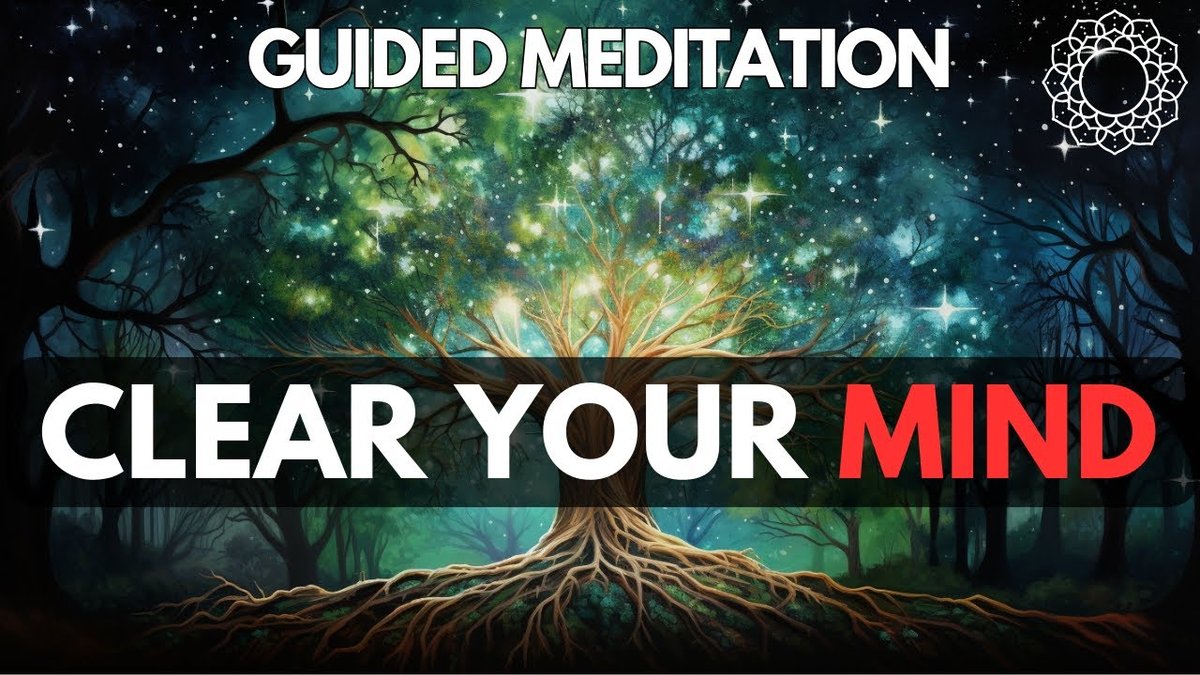
Your mind feels like a browser with 100 tabs open. Deadlines, worries, a forgotten grocery list—they all demand your attention at once, creating a constant, low-grade hum of mental noise. This isn’t just distracting; it’s exhausting. But what if you could gently close those tabs, one by one, without force? That’s the promise of clear mind meditation, a practical and ancient technique for reclaiming your mental space.
This isn’t about emptying your mind or achieving some mythical state of “no thoughts.” It’s about changing your relationship with your thoughts, allowing you to find a calm, focused center amidst the chaos. It’s a skill, and like any skill, it can be learned.
New to meditation or just looking for a refresher? Here’s the essential rundown of what you’ll find in this guide:
The Core Idea: Clear mind meditation is about observing your thoughts without judgment, letting them come and go to achieve mental quiet.
The Three Pillars: The practice stands on Awareness, Acceptance, and Non-attachment—a simple framework for managing your inner world.
Tangible Benefits: Expect more than just feeling calm. Regular practice can sharpen focus, lower stress hormones, build emotional resilience, and even improve your sleep.
Actionable Techniques: We’ll cover simple yet powerful methods you can use today, including specific breathing exercises, visualization, and the body scan.
Getting Started: You’ll find a simple 8-minute guided practice to begin your journey and practical tips for building a routine that sticks.
Beyond “Just Relaxing”: The Goal of Mental Clarity
Many people think meditation is about forcing your mind to go blank. If you’ve ever tried that, you know it’s a recipe for frustration. Thoughts are what the brain does. Trying to stop them is like trying to stop the waves in the ocean.
Clear mind meditation, with roots in ancient Zen traditions, takes a wiser approach. The goal isn’t to stop the waves but to learn how to surf them. It’s a practice of achieving mental clarity by letting go of the need to control, analyze, or cling to every thought that pops into your head. You become the observer, not the participant in the mental drama.
The Three Pillars: Awareness, Acceptance, and Non-Attachment
This entire practice is built on a simple yet profound three-part framework. Understanding these principles is the first step to fundamentally shifting your internal landscape.
Awareness: This is the simple act of noticing. You pay attention to the thoughts, feelings, and physical sensations that arise in the present moment. Think of it as turning a gentle, non-judgmental spotlight on your inner experience. You’re just seeing what’s there.
Acceptance: Here’s where the magic happens. Instead of labeling thoughts as “good” or “bad,” or trying to push unwanted feelings away, you accept them as they are. An anxious thought is just a thought. A feeling of boredom is just a feeling. You greet them without resistance, which robs them of their power.
Non-attachment: Once you’ve noticed and accepted a thought, you let it go. You don’t follow it down a rabbit hole or get attached to its story. Imagine your thoughts are clouds drifting across the sky of your mind. You can notice a big, dark storm cloud (Awareness), acknowledge “that’s a storm cloud” (Acceptance), and then simply watch it float by without getting swept up in the rain (Non-attachment).
More Than a Feeling: Tangible Rewards for Your Brain and Body
The serene feeling after a good meditation session is just the beginning. Committing to a regular practice triggers measurable changes in your mental and physical well-being.
Sharpened Focus and Concentration: In a world of constant pings and notifications, our attention is fragmented. Meditation is like a workout for your prefrontal cortex, the part of your brain responsible for focus and decision-making. By repeatedly bringing your attention back to a single point (like your breath), you strengthen your ability to concentrate.
Reduced Stress and Anxiety: When you’re stressed, your body floods with the hormone cortisol. Chronic high cortisol levels are linked to a host of health issues. Clear mind meditation activates your body’s relaxation response, helping to lower cortisol levels and dial down your fight-or-flight system.
Enhanced Emotional Resilience: Resilience isn’t about not feeling difficult emotions; it’s about how quickly you recover from them. By practicing non-attachment, you learn not to over-identify with your feelings. You create a buffer of space that allows you to respond to life’s challenges with more calm and wisdom instead of reacting impulsively.
Improved Sleep Quality: If your mind races the moment your head hits the pillow, meditation can be a game-changer. By calming the nervous system and practicing letting go of the day’s worries, you create the ideal conditions for a deeper, more restorative sleep.
Stronger Interpersonal Connections: A clear mind fosters greater patience and understanding. When you’re less caught up in your own mental chatter, you can be more present and empathetic with others, leading to more meaningful relationships.
Your Toolkit: Four Practical Paths to a Quieter Mind
Ready to try it for yourself? You don’t need any special equipment—just a few minutes and a willingness to be present. Here are four foundational techniques to get you started.
1. Anchor Yourself with Breathwork
Your breath is the most powerful and portable meditation tool you have. It’s always with you, and it provides a physical sensation to anchor your awareness in the present moment. When your mind wanders (and it will), you can always gently guide it back to the feeling of your breath.
Deep Belly Breathing: Place one hand on your chest and the other on your belly. As you inhale slowly through your nose, focus on making your belly rise, keeping your chest relatively still. Exhale slowly through your mouth, feeling your belly fall. This engages the diaphragm for a deeper, more calming breath.
The 4-7-8 Breath: A favorite for calming anxiety quickly. Inhale quietly through your nose for a count of 4. Hold your breath for a count of 7. Exhale completely through your mouth with a whooshing sound for a count of 8. Repeat 3-4 times.
Box Breathing: This simple, rhythmic technique is used by everyone from Navy SEALs to yoga instructors to regulate stress.
Inhale slowly through your nose for 4 counts.
Hold your breath for 4 counts.
Exhale slowly through your nose for 4 counts.
Hold the exhale for 4 counts.
Repeat the cycle for several minutes.
2. Paint a Picture with Visualization
Visualization uses the power of your imagination to guide your mind toward a state of peace and clarity. Instead of just focusing on the breath, you create a rich mental image to occupy your attention.
A common starting point is the “safe space” visualization. Close your eyes and imagine a place where you feel completely safe, calm, and happy. It could be a real place, like a favorite beach, or an imagined one, like a cozy cabin in the woods. Use all your senses: What do you see? What do you hear? What do you smell? Spend a few minutes just being in this space.
3. Reconnect with a Body Scan
The body scan is a fantastic way to release hidden physical tension and ground yourself in your body. It involves bringing sequential, non-judgmental attention to different parts of your body.
Start by lying down comfortably. Bring your awareness to the toes on your left foot. Just notice any sensations—warmth, tingling, pressure—without needing to change anything. Then, slowly move your attention up your left leg: to your foot, ankle, calf, and thigh. Repeat on the right side, then move up through your torso, arms, neck, and face, gently observing each part.
4. Weave Mindfulness into Your Day
Meditation isn’t just something you do for 10 minutes on a cushion. The ultimate goal is to bring that sense of calm awareness into your everyday life. You can turn any routine activity into a mindfulness practice.
The next time you wash the dishes, for instance, try to do only that. Feel the warmth of the water on your hands. Hear the sound of the sponge against the plate. Smell the soap. When your mind wanders to your to-do list, gently guide it back to the sensations of washing the dishes. You can Clear your mind with meditation in moments throughout your day, transforming chores into opportunities for peace.
Your First Session: An 8-Minute Clear Mind Reset
Theory is great, but practice is everything. Here is a simple, 8-minute guided session you can try right now. Find a comfortable place to sit, set a timer, and gently close your eyes. Step 1: Settle In with Box Breathing (2 Minutes)
Begin by finding your posture—seated upright but relaxed. Start the Box Breathing technique: inhale for 4, hold for 4, exhale for 4, hold for 4. Let the rhythm of your breath be your only focus. If thoughts arise, just notice them and gently return to the count. Step 2: Visualize Your “Perfect Day” (4 Minutes)
Let your breathing return to normal. Now, bring to mind an image of a perfect day. It doesn’t have to be extravagant. It could be the feeling of the sun on your skin, the taste of your morning coffee, or the sound of a loved one’s laughter. Immerse yourself in the feeling of this moment. What does clarity, joy, and purpose feel like in your body? Stay with this positive visualization. Step 3: Seal It with an Affirmation (2 Minutes)
For the final two minutes, silently repeat this affirmation to yourself with each exhale: “I release what no longer serves me. I welcome clarity and purpose.” Feel the intention behind the words. Let go of mental clutter with each out-breath and invite in a sense of quiet focus with each in-breath. When your timer goes off, slowly open your eyes.
From One Session to a Daily Ritual
The profound benefits of meditation come from consistency, not intensity. A daily 5-minute practice is far more effective than a sporadic hour-long session. Here’s how to build a routine that lasts.
Set the Stage for Success
Find Your Spot: Designate a quiet place where you won’t be interrupted. It doesn’t have to be a special room; a comfortable chair in a quiet corner works perfectly.
Set a Realistic Goal: Don’t start with a 30-minute goal. You’ll likely feel overwhelmed and quit. Begin with just 5 or 10 minutes a day. You can always increase the time later.
Schedule It: “Habit-stacking” is a powerful technique. Link your meditation practice to an existing daily habit, like right after you brush your teeth or before you drink your morning coffee. This creates an automatic trigger.
Track Your Journey, Not Just Your Destination
Consider keeping a simple journal. After each session, jot down a few notes. How did you feel? Was your mind busy or calm? What did you notice? This isn’t about judging your performance but about building self-awareness and noticing subtle shifts over time.
“I Can’t Stop Thinking!” and Other Common Roadblocks
As you begin your practice, you’ll inevitably run into a few common hurdles. This is completely normal—it’s part of the process. The Hurdle: “My mind is too busy. I can’t stop my thoughts.”
This is the single most common misconception. Remember, the goal isn’t to stop thoughts. The goal is to notice you’re thinking and gently guide your attention back to your anchor (your breath, body, or visualization). Every time you do this, you’re building your “focus muscle.” The Hurdle: “I feel fidgety and restless.”
First, check your posture. Are you comfortable? It’s okay to shift your position. If sitting still feels impossible, try a walking meditation. Walk slowly and mindfully, paying attention to the sensation of your feet on the ground. The Hurdle: “I’m not feeling any different. Am I doing it wrong?”
Let go of expectations. Some days your meditation will feel calm and profound. Other days it will feel like a mental wrestling match. Both are valid. The goal is simply to show up and do the practice. The benefits accumulate quietly in the background, not in one big “aha” moment. Focus on the process, not the perceived results.
Your Next Step: From Reading to Doing
You now have the framework, the techniques, and the troubleshooting guide to begin your clear mind meditation practice. The most important thing you can do now is move from intellectual understanding to direct experience.
You don’t need to wait for the “perfect” moment. The perfect moment is now. Take five minutes. Try the 8-minute guided reset. Choose one technique—like Box Breathing—and practice it for just two minutes.
The journey to a clearer, calmer mind isn’t about achieving perfection. It’s a gentle, consistent practice of returning to yourself, one breath at a time. The peace and focus you’re seeking are already within you, just waiting beneath the noise. Your job is simply to create the space to listen.
I am a writer specializing in health and lifestyle, committed to delivering well-researched, engaging, and insightful content. With a keen eye for trends and a deep understanding of health, presenting and exploring topics ranging from nutrition and mental health to sustainable living. This writing is solely intended to educate, inspire, and empower readers to live a healthier, more balanced life.