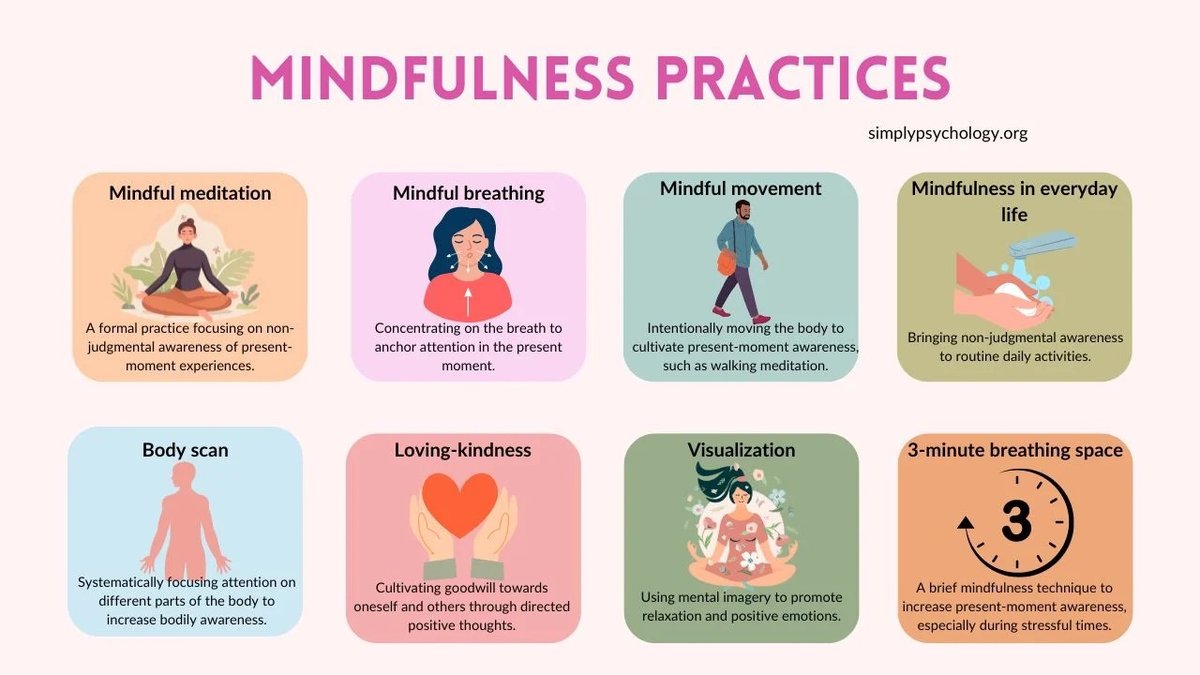
It’s 3 PM, your focus is shattered, and your inbox is overflowing. The idea of “being present” feels like a luxury you can’t afford. But what if you could reset your nervous system in under five minutes? This is where a simple mindfulness exercises pdf becomes a practical tool, not just a concept, offering structured guidance to reclaim your calm and focus right now.
These aren’t vague suggestions to “just relax.” They are research-backed techniques designed to ground you in the present moment, untangling you from the stress of what’s past and the anxiety of what’s next.
At a Glance: Your Toolkit for Calm and Focus
Discover specific, age-appropriate mindfulness exercises for adults, teens, and children.
Learn targeted techniques for managing anxiety, depression, and workplace stress.
Get step-by-step instructions for popular exercises like Square Breathing and The Five Senses.
Understand how mindfulness is applied in therapeutic settings like Dialectical Behavior Therapy (DBT).
Find actionable tips to build a consistent and effective mindfulness practice.
Beyond the Buzzword: What Mindfulness Actually Does
Rooted in Hindu and Buddhist traditions, mindfulness is simply the practice of paying attention to the present moment—your thoughts, feelings, and physical sensations—without judgment. Modern therapeutic approaches like Acceptance and Commitment Therapy (ACT) and Dialectical Behavior Therapy (DBT) have integrated it as a core component for a reason: it works.
Consistent practice has been shown to improve emotional self-regulation, sharpen attention, and reduce stress and anxiety. It’s a workout for your brain that builds resilience. Structured worksheets can make this practice less intimidating and easier to integrate into a busy life. For a comprehensive set of tools covering various needs, you can Download free mindfulness worksheets and discover which exercises resonate most with you.
Practical Mindfulness Exercises for Adults
For adults, the goal is often to find pockets of calm in a demanding day. These exercises are designed for efficiency and immediate impact.
Master Calm with Square Breathing
This technique, also called box breathing, is a favorite of Navy SEALs for a reason. It directly engages the parasympathetic nervous system, telling your body it’s safe to relax.
Step 1: Inhale. Breathe in slowly through your nose to a count of four. Feel the air fill your lungs.
Step 2: Hold. Hold your breath for a count of four. Try not to tense your shoulders.
Step 3: Exhale. Breathe out slowly through your mouth for a count of four.
Step 4: Hold. Hold your breath again for a count of four.
Repeat the cycle 4-5 times or until you feel your heart rate slow and your mind settle.
Use FLARE to Navigate Fear and Anxiety
When anxiety strikes, our instinct is often to fight it or run from it. FLARE offers a compassionate alternative. It’s an acronym for a mindful process:
F – Feel: Acknowledge the physical sensation of the emotion. Is your chest tight? Are your palms sweaty? Just notice it without judgment.
L – Listen: What is the story your mind is telling you? Notice the anxious thoughts without getting swept away by them.
A – Accept: This doesn’t mean you approve of the feeling. It means you stop fighting it. Say to yourself, “Anxiety is here right now.”
R – Release: Let go of the need to control the feeling. Visualize it as a cloud passing in the sky.
E – Expand: Broaden your awareness beyond the anxiety. Notice the feeling of your feet on the floor, the sound of a clock ticking, or the warmth of your hands.
Building Resilience: Mindfulness for Teens
Adolescence is a time of immense change and pressure. These exercises help teens build a stable inner foundation.
The 5-4-3-2-1 Countdown to Calmness
This is a powerful grounding technique to pull a teen out of an anxious thought spiral and back into the present moment. It’s discreet and can be done anywhere.
Look: Name 5 things you can see around you. (e.g., a blue pen, a crack in the ceiling, a dusty leaf on a plant).
Feel: Notice 4 things you can feel. (e.g., the texture of your jeans, the smooth surface of your phone, the cool air on your skin).
Listen: Identify 3 things you can hear. (e.g., the hum of a computer, distant traffic, your own breathing).
Smell: Name 2 things you can smell. (e.g., coffee brewing, the scent of a book, hand sanitizer).
Taste: Notice 1 thing you can taste. (e.g., the lingering taste of toothpaste, a sip of water).
Connect the DOTS for Unhelpful Thoughts
This worksheet-based exercise introduces four strategies to handle overwhelming thoughts, helping teens see that they don’t have to believe everything their mind tells them.
D – Distract: Mindfully engage in a different activity.
O – Observe: Watch the thought come and go like a cloud.
T – Tolerate: Sit with the discomfort, knowing it will pass.
S – Self-Soothing: Use the five senses to calm down.
Playful Presence: Engaging Exercises for Children
For kids, mindfulness should feel like a game, not a chore. These activities build emotional intelligence and focus in a fun, accessible way.
Dragon Fire Breathing
This simple, imaginative exercise helps children connect their breath to their feelings, especially frustration or anger.
Instructions: “Pretend you’re a big, strong dragon. Take a deep breath in through your nose, filling up your whole belly with fiery air. Now, open your mouth wide and whoosh! Breathe out all your fire and smoke. Let’s do it again and breathe out all the mad feelings.”
The Feelings Wheel
A Feelings Wheel is a visual tool that helps kids identify and name their emotions beyond “happy” or “sad.”
How it works: A printable PDF shows a wheel with core emotions in the center (like sad, mad, scared) and more nuanced feelings in the outer rings (like lonely, frustrated, worried). You can ask a child, “Where are you on the wheel right now?” This builds emotional vocabulary and normalizes their inner experience.
Targeted Tools for Specific Challenges
Mindfulness isn’t a one-size-fits-all solution. Different contexts call for different tools.
For Anxiety and Depression
When dealing with anxiety or depression, mindfulness helps create space between you and the overwhelming thoughts or feelings.
Who Am I Beyond My Anxiety?: This reflective worksheet encourages you to list your strengths, values, and roles that exist independently of your anxiety. It’s a powerful reminder that you are not your diagnosis.
Three Steps to Deep Breathing: This exercise teaches a fuller, more calming breath.
Belly: Place a hand on your belly and breathe in, feeling it expand.
Chest: Continue the inhale, allowing your chest to rise.
Collarbone: Take in the last sip of air, feeling a slight lift in your collarbones.
Exhale slowly in reverse.
For the Workplace
Bringing mindfulness to work can boost focus, reduce stress, and improve team dynamics.
STOP the Panic: When workplace stress peaks, use this acronym.
S – Stop: Pause whatever you are doing.
T – Take a breath: Take one conscious, deep breath.
O – Observe: Notice what is happening in your body and mind without judgment.
P – Proceed: Continue with your task with renewed awareness.
The Raisin Meditation: A classic workshop exercise. Participants are given a single raisin and guided to explore it with all five senses for several minutes. It’s a profound demonstration of how much we miss when we’re on autopilot.
For DBT and Therapy
In Dialectical Behavior Therapy, mindfulness is the foundational “core” skill. It helps clients learn to observe their intense emotions without acting on destructive urges.
Observing Anxiety Mindfully: Instead of fighting anxiety, this exercise guides you to observe it like a scientist. Where do you feel it? What shape does it have? Does it change? This non-judgmental observation reduces the fear of the emotion itself.
Linking Feelings and Situations: This worksheet helps clients draw connections between past events, triggering situations, and current emotional responses, fostering self-awareness and breaking unhelpful patterns.
Your 5-Minute Mindfulness Playbook
Getting started is the hardest part. Here’s a simple plan to build the habit.
Step
Action
Why It Works
1. Choose One Exercise
Pick the simplest exercise from this list that appeals to you. (Square Breathing is a great start).
Prevents decision fatigue and makes the task feel manageable.
2. Set a Tiny Goal
Commit to practicing for just one minute a day for one week.
A one-minute goal is too small to fail, which builds momentum and confidence.
3. Link it to a Habit
Practice right after something you already do every day, like brewing coffee or brushing your teeth.
Habit-stacking makes the new behavior automatic and removes the need for willpower.
4. Be Kind to Yourself
Your mind will wander. That’s its job. Gently and kindly guide your focus back each time.
The practice isn’t about emptying your mind; it’s about the gentle act of returning to the present.
Quick Answers to Common Questions
Q: What if my mind keeps wandering during these exercises?
A: That’s completely normal—it’s what minds do! The goal of mindfulness isn’t to have a blank mind. The “exercise” is the moment you notice your mind has wandered and you gently guide it back to your breath or your senses. Every time you do that, you’re strengthening your attention muscle. Q: Do I need a special, quiet place to practice?
A: While a quiet space is helpful when you’re learning, it’s not required. The most powerful mindfulness is often practiced in the middle of a chaotic day. You can do a breathing exercise while waiting in line, or the 5-4-3-2-1 technique during a stressful meeting. The aim is to integrate it into your life, not escape from it. Q: How do I know if it’s working?
A: The benefits are often subtle at first. You might not feel a lightning bolt of calm. Instead, you may notice that you paused for a second before reacting in anger. Or perhaps you became aware of your tense shoulders and consciously relaxed them. Progress is measured in these small moments of awareness, which accumulate over time.
Start with a Single Conscious Breath
You don’t need to overhaul your entire life to benefit from mindfulness. You just need to begin. The most powerful mindfulness exercises pdf is the one you actually use.
Forget about perfection. Forget about quieting your mind. Just choose one simple practice from this guide—like Square Breathing or the 5-4-3-2-1 grounding technique—and try it once today. That single, intentional moment of awareness is a victory. It’s the first step toward building a more focused, calm, and resilient you.
I am a writer specializing in health and lifestyle, committed to delivering well-researched, engaging, and insightful content. With a keen eye for trends and a deep understanding of health, presenting and exploring topics ranging from nutrition and mental health to sustainable living. This writing is solely intended to educate, inspire, and empower readers to live a healthier, more balanced life.