Of course. Here is the comprehensive pillar article on mindfulness readings, written in the voice of a seasoned journalist and subject-matter expert.
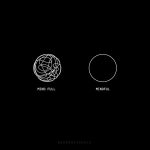
Your mind feels like a browser with too many tabs open—work deadlines, a half-remembered grocery list, a replayed conversation, a low-grade hum of anxiety about the future. You sit down to meditate, to find that quiet space, but the silence is deafening, filled only with the chaotic chatter you were trying to escape. If this sounds familiar, you’re not alone. But what if you had an anchor? This is where the profound practice of using mindfulness readings can change everything.
These aren’t just pretty words; they are tools. A poem, a short piece of prose, or a powerful quote can act as a gentle guide, giving your restless mind a place to land and explore. Instead of fighting the noise, you offer it a focus—a single, resonant idea to hold.
At a Glance: Your Guide to Mindfulness Readings
What They Are: Mindfulness readings are carefully chosen texts—often poems or short prose—used to anchor your attention and evoke a state of presence during meditation or quiet reflection.
Why They Work: They provide a specific, gentle focus for the mind, making it easier to stay in the present moment compared to purely silent or breath-focused practices, especially for beginners.
How to Use Them: You can read a piece before you meditate, hold a single line in your mind during your practice, or use it as a journaling prompt afterward.
What You’ll Find Below: This guide offers a simple framework for incorporating readings into your routine, a curated collection of powerful texts organized by theme, and answers to common questions to help you get started.
Why Words? The Surprising Power of a Mindful Anchor
Traditional mindfulness practices often center on the breath or bodily sensations. These are powerful anchors, but for many, the abstract nature of “watching the breath” can feel like a recipe for more mind-wandering. The mind, a natural storyteller, often craves something with a little more substance to hold onto.
Mindfulness readings offer that substance. Think of it like this:
A Rung on the Ladder: If your mind is a frantic monkey, a good reading is the first rung on a ladder. It’s easier to grab onto than the empty air of pure silence. It gives the mind a job: to ponder an image, a feeling, or a question.
Emotional Resonance: A well-chosen poem or quote can tap directly into an emotion you’re feeling—be it anxiety, joy, or grief. By meeting you where you are, the reading helps you observe that feeling with curiosity rather than being consumed by it. As the poet David Whyte suggests, it helps you have “a conversation with the part of you that is trying to emerge.”
Borrowed Perspective: Sometimes, we’re too stuck in our own heads to see a way out. A reading from Thich Nhat Hanh, Mary Oliver, or Rumi offers a different perspective. It’s like a wise friend sitting with you, gently pointing out the sunlight filtering through the leaves or the simple resilience of a blade of grass.
The goal isn’t to analyze the text academically but to let it wash over you. The words are a vessel, carrying you back to the present moment, again and again.
How to Weave Readings into Your Mindfulness Practice
Integrating readings into your routine is beautifully simple. There are no rigid rules, only invitations. Here’s a gentle framework you can adapt to fit your life. 1. Choose Your Reading: Select a poem or passage that speaks to you. Don’t overthink it. It might be something that reflects your current mood, or one that offers a quality you’d like to cultivate, like patience or kindness. 2. Settle In: Find a comfortable posture, whether you’re sitting on a cushion or in a chair at your desk. Take a few deep, grounding breaths to signal to your body that it’s time to be still. 3. Read Slowly and Intentionally: Read the text once or twice, either silently or aloud. Let the pace be unhurried. Notice which words or phrases stand out. There’s no need to rush to the end; the value is in the journey. 4. Sit with a Single Anchor: Choose a line, an image, or even a single word from the reading that resonates. Let this be your focus. For example, from Wendell Berry’s “The Peace of Wild Things,” you might simply hold the image of “still water.” 5. Meditate with the Anchor: Close your eyes and bring your anchor to mind. When your thoughts inevitably wander (and they will!), gently guide your attention back to your chosen word or image, just as you would with your breath. Let the meaning and feeling of the words unfold within you without force. 6. Reflect and Release: After your desired time, gently release your focus. You might choose to spend a minute or two journaling about any insights that arose. Or you can simply carry the essence of the reading with you as you move into the rest of your day.
A Gentle Reminder: This is a practice of self-compassion, not perfection. If you read a poem and your mind is a whirlwind, that’s okay. The act of sitting and creating the space is the practice itself. The reading is just a friend to keep you company.
A Curated Collection of Mindfulness Readings
Here are some powerful readings, organized by theme, to help you begin your exploration. These are drawn from poets and thinkers who have mastered the art of paying attention.
For Finding Peace in Nature and the Present
When the world feels overwhelming, these readings root you in the simple, profound truths of the natural world. They remind you that you, too, are a part of it.
The Peace of Wild Things by Wendell Berry
When despair for the world grows in me
and I wake in the night at the least sound
in fear of what my life and my children’s lives may be,
I go and lie down where the wood drake
rests in his beauty on the water, and the great heron feeds.
I come into the peace of wild things
who do not tax their lives with forethought
of grief. I come into the presence of still water.
And I feel above me the day-blind stars
waiting with their light. For a time
I rest in the grace of the world, and am free.
Dust of Snow by Robert Frost
The way a crow
Shook down on me
The dust of snow
From a hemlock tree
Has given my heart
A change of mood
And saved some part
Of a day I had rued.
Summer Day by Mary Oliver
Who made the world?
Who made the swan, and the black bear?
Who made the grasshopper?
This grasshopper, I mean—
the one who has flung herself out of the grass,
the one who is eating sugar out of my hand,
who is moving her jaws back and forth instead of up and down—
who is gazing around with her enormous and complicated eyes.
Now she lifts her pale forearms and thoroughly washes her face.
Now she snaps her wings open, and floats away.
I don’t know exactly what a prayer is.
I do know how to pay attention, how to fall down
into the grass, how to kneel down in the grass,
how to be idle and blessed, how to stroll through the fields,
which is what I have been doing all day.
Tell me, what else should I have done?
Doesn’t everything die at last, and too soon?
Tell me, what is it you plan to do
with your one wild and precious life?
For Welcoming All of Life (Even the Hard Parts)
Mindfulness isn’t about blocking out difficult emotions. It’s about learning to greet them with curiosity and compassion. These readings are a masterclass in acceptance.
The Guest House by Rumi
This being human is a guest house.
Every morning a new arrival.
A joy, a depression, a meanness,
some momentary awareness comes
as an unexpected visitor.
Welcome and entertain them all!
Even if they’re a crowd of sorrows,
who violently sweep your house
empty of its furniture,
still, treat each guest honorably.
He may be clearing you out
for some new delight.
The dark thought, the shame, the malice,
meet them at the door laughing,
and invite them in.
Be grateful for whoever comes,
because each has been sent
as a guide from beyond.
Kindness by Naomi Shihab Nye
Before you know what kindness really is
you must lose things,
feel the future dissolve in a moment
like salt in a weakened broth.
What you held in your hand,
what you counted and carefully saved,
all this must go so you know
how desolate the landscape can be
between the regions of kindness.
How you ride and ride
thinking the bus will never stop,
the passengers eating maize and chicken
will stare out the window forever.
Before you learn the tender gravity of kindness,
you must travel where the Indian in a white poncho
lies dead by the side of the road.
You must see how this could be you,
how he too was someone
who journeyed through the night with plans
and the simple breath that kept him alive.
Before you know kindness as the deepest thing inside,
you must know sorrow as the other deepest thing.
You must wake up with sorrow.
You must speak to it till your voice
catches the thread of all sorrows
and you see the size of the cloth.
Then it is only kindness that makes sense anymore,
only kindness that ties your shoes
and sends you out into the day to mail letters and purchase bread,
only kindness that raises its head
from the crowd of the world to say
It is I you have been looking for,
and then goes with you everywhere
like a shadow or a friend.
For Embracing Simplicity and Self-Trust
In a world that constantly demands more, these readings are a radical call to return to what is essential: your own inner wisdom, your own path, and the profound sufficiency of this very moment.
Wild Geese by Mary Oliver
You do not have to be good.
You do not have to walk on your knees
for a hundred miles through the desert, repenting.
You only have to let the soft animal of your body
love what it loves.
Tell me about despair, yours, and I will tell you mine.
Meanwhile the world goes on.
Meanwhile the sun and the clear pebbles of the rain
are moving across the landscapes,
over the prairies and the deep trees,
the mountains and the rivers.
Meanwhile the wild geese, high in the clean blue air,
are heading home again.
Whoever you are, no matter how lonely,
the world offers itself to your imagination,
calls to you like the wild geese, harsh and exciting—
over and over announcing your place
in the family of things.
Enough by David Whyte
Enough. These few words are enough.
If not these words, this breath.
If not this breath, this sitting here.
This opening to the life
we have refused
again and again
until now.
Until now.
The Journey by Mary Oliver
One day you finally knew
what you had to do, and began,
though the voices around you
kept shouting
their bad advice—
though the whole house
began to tremble
and you felt the old tug
at your ankles.
“Mend my life!”
each voice cried.
But you didn’t stop.
You knew what you had to do,
though the wind pried
with its stiff fingers
at the very foundations,
though their melancholy
was terrible.
It was already late
enough, and a wild night,
and the road full of fallen
branches and stones.
But little by little,
as you left their voices behind,
the stars began to burn
through the sheets of clouds,
and there was a new voice
which you slowly
recognized as your own,
that kept you company
as you strode deeper and deeper
into the world,
determined to do
the only thing you could do—
determined to save
the only life you could save.
Finding a reading that resonates is a deeply personal act of self-trust, and it’s a wonderful way to Read for daily calm.
Common Questions About Mindfulness Readings
As you start this practice, a few questions might pop up. Here are some straightforward answers to help guide you.
Do I have to use poetry?
Not at all. While poetry is potent because it condenses emotion and imagery, you can use any text that helps you feel present. This could be a paragraph from a spiritual teacher like Thich Nhat Hanh, a quote from the philosopher Epictetus, or even a single, profound sentence you stumbled upon in a novel. The key is that it resonates with you.
What if my mind still wanders?
Congratulations, you have a perfectly normal human mind! The goal is not to stop your thoughts. The reading is simply an anchor. When you notice your mind has drifted to your to-do list or a worry, gently and without judgment, guide it back to the word or image from your text. The act of returning is the core of the practice.
How do I find more readings?
Once you start looking, you’ll see them everywhere. Excellent sources include:
Poetry Anthologies: Collections by Mary Oliver, David Whyte, Rumi, and Wendell Berry are wonderful starting points.
Websites: The Poetry Foundation and The Marginalian (formerly Brain Pickings) are treasure troves.
Your Own Bookshelf: Keep a small notebook to jot down passages from books you’re reading that stop you in your tracks. Over time, you’ll build a personal collection of anchors.
Can a reading be too long or too short?
There is no “right” length. David Whyte’s “Enough” is incredibly short but can be contemplated for twenty minutes. A longer poem might be read in full before you sit in silence. Trust your intuition. If a single line from a long poem is what holds you, that is more than enough.
Your Turn to Find an Anchor
The most beautiful part of this practice is its accessibility. You don’t need a special app, a silent retreat, or an hour of uninterrupted time. All you need is a quiet moment, a few deep breaths, and a handful of words that speak to you.
Start small. Pick one reading from the list above that piques your curiosity. Read it before you start your day tomorrow. See what it feels like to carry a line like “You only have to let the soft animal of your body love what it loves” with you as you make your coffee.
These readings are not an escape from your life; they are a doorway into it. They are an invitation to pay attention, to befriend yourself, and to discover the quiet wisdom that is already waiting within you. All you have to do is listen.
I am a writer specializing in health and lifestyle, committed to delivering well-researched, engaging, and insightful content. With a keen eye for trends and a deep understanding of health, presenting and exploring topics ranging from nutrition and mental health to sustainable living. This writing is solely intended to educate, inspire, and empower readers to live a healthier, more balanced life.