When you’re caught in a spiral of intense emotion, the last thing you want to hear is “just relax.” For many, that advice feels impossible and dismissive. This is precisely where dbt mindfulness handouts offer a different, more structured path forward—they aren’t about emptying your mind, but about skillfully navigating what’s already in it. They provide a concrete framework for building the awareness needed to stop reacting on autopilot and start responding with intention.
At a Glance: What You’ll Learn
The DBT Difference: Understand why DBT mindfulness is a targeted skill for emotional regulation, not just general relaxation.
Access Your “Wise Mind”: Learn to find the crucial balance between your emotional and rational thoughts.
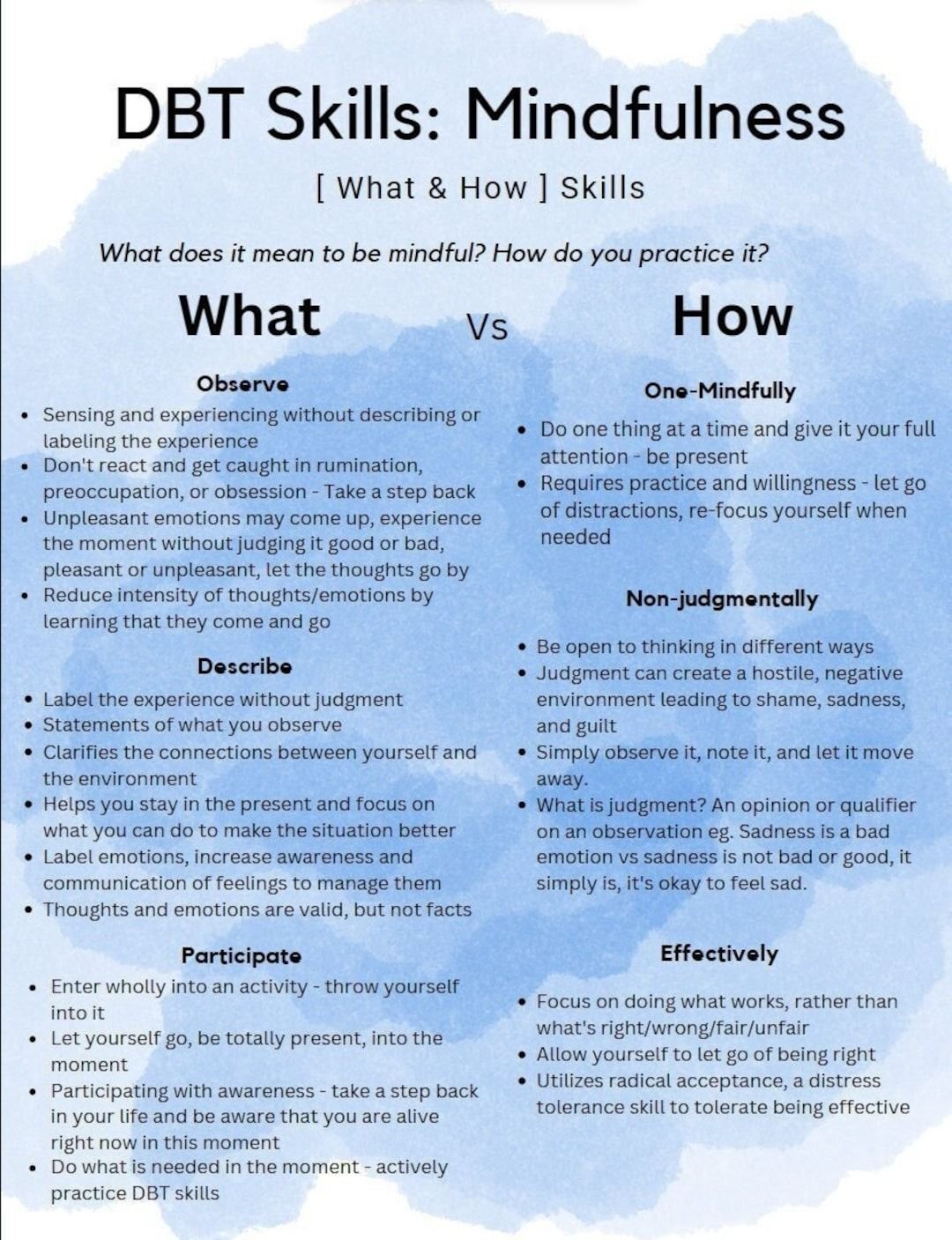
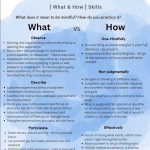
Master the Core Skills: Get practical, step-by-step guidance on the “What” skills (Observe, Describe, Participate) and “How” skills (Non-judgmentally, One-mindfully, Effectively).
Apply It Today: See how to use a handout in a real-world scenario to manage a difficult moment.
Avoid Common Pitfalls: Get clear answers to common questions and misconceptions about the practice.
Moving Beyond “Just Breathe”: What Makes DBT Mindfulness Different?
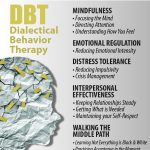
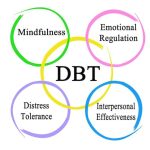
Dialectical Behavior Therapy (DBT) is a powerful, evidence-based therapy originally developed by Dr. Marsha Linehan to help individuals with extreme emotional sensitivity. At its core is the practice of mindfulness, but with a specific job to do: building the skills to tolerate distress and regulate emotions.
Unlike mindfulness practices that might focus solely on peace or relaxation, DBT mindfulness is about learning to see reality as it is—both the internal world of your thoughts and feelings and the external world of events—without judgment. It’s the foundation for making skillful choices instead of being driven by emotional pain, impulsivity, or avoidance.
While general mindfulness exercises are incredibly valuable (you can find a great collection in our guide to Download Free Mindfulness Worksheets), DBT hones this practice for specific challenges like emotional dysregulation and interpersonal conflict. It gives you a vocabulary and a set of tools to use when your internal alarm bells are ringing.
Finding Balance: How to Access Your “Wise Mind”
DBT proposes we have three primary states of mind, and understanding them is the first step toward balance. Handouts often use diagrams to illustrate this crucial concept.
Emotional Mind: This is the hot state. It’s when your emotions are in the driver’s seat, controlling your thoughts and behaviors. Logic and reason take a back seat. Example: Firing off an angry email to your boss after receiving critical feedback.
Reasonable Mind: This is the cool, logical state. It operates on facts, data, and rational thought, often ignoring emotions entirely. Example: Creating a perfect project plan but completely overlooking how stressed and burnt out your team is.
Wise Mind: This is the synthesis of both. It’s the deep, intuitive place where you can acknowledge your emotions and honor rational thought. Wise Mind is the calm, grounded center that knows what to do. It feels true on a gut level.
A common exercise found on a DBT handout to access Wise Mind is beautifully simple: Sit quietly and focus on your breath. As you breathe in, silently say the word “Wise.” As you breathe out, silently say “Mind.” By focusing on this intersection of an intuitive concept and a physical sensation (your breath), you can often tap into that centered state.
The “What” Skills: Learning to Observe, Describe, and Participate
The “What” skills are the actions of mindfulness. They are the core things you do when you practice. DBT mindfulness handouts break them down into three distinct tasks.
1. Observe
Observing is simply noticing your experience without getting stuck in it. This means paying attention on purpose to your body sensations, thoughts, and emotions as they come and go. Imagine you are sitting on the bank of a river, watching leaves (your thoughts and feelings) float by. You don’t jump in the river; you just watch.
How it looks in practice: You feel a surge of anxiety. Instead of immediately reacting, you simply notice it: “There is a tightness in my chest. My heart is beating faster. A thought ‘I’m going to fail’ just appeared.” You do not judge these sensations or thoughts; you just acknowledge their presence.
2. Describe
Describing is putting non-judgmental words to what you observe. This is a critical step because it separates you from your experience. You are not your emotion; you are the one experiencing the emotion.
How it looks in practice:
Instead of: “I’m so sad and pathetic.”
Try: “I am noticing a feeling of sadness and a thought that I am pathetic.”
This subtle shift in language creates space. The thought becomes just another event in your mind, not an objective fact. A handout might prompt you to list observations and then find factual, non-judgmental words to describe them.
3. Participate
Participating is about throwing yourself completely into the present moment. It means becoming one with your activity, losing the sense of self-consciousness that so often plagues us. It’s about being fully present in your own life.
How it looks in practice: When you’re talking with a friend, you are only listening to them, not planning what you’ll say next. When you’re eating, you are fully tasting the food. When you’re walking, you feel your feet on the ground. You are in the moment, not just thinking about it.
The “How” Skills: Your Toolkit for Non-Judgmental, Focused Action
If the “What” skills are the nouns and verbs of mindfulness, the “How” skills are the adverbs. They describe the way you observe, describe, and participate.
1. Non-Judgmentally
This means seeing things as they are, without adding labels of “good,” “bad,” “right,” “wrong,” “stupid,” or “should.” Judgments often fuel emotional suffering. Non-judgment is about sticking to the facts.
Case Snippet: Maria often berated herself with thoughts like, “I’m so lazy for not cleaning the kitchen.” Using a DBT mindfulness handout, she practiced reframing this non-judgmentally: “I am noticing a feeling of fatigue and I see that the dishes are in the sink.” This removed the layer of shame, allowing her to decide what to do next from a place of clarity rather than self-criticism.
2. One-Mindfully
This is the art of doing one thing at a time. In a world that celebrates multitasking, one-mindfulness is a radical act. When you are doing something, put your whole attention on it. If your mind wanders (which it will), gently guide it back.
How it looks in practice: When you’re drinking your morning coffee, just drink your coffee. Notice the warmth of the mug, the aroma, the taste. Resist the urge to check your phone, run through your to-do list, or watch the news. The goal is to bring your full self to one single activity.
3. Effectively
Being effective means doing what works to achieve your goals in a given situation, rather than being driven by what feels “right,” “fair,” or “principled” in the moment. It requires you to be flexible and ask, “What is my objective here, and what action will get me closer to it?”
How it looks in practice: You’re stuck in traffic and late for an important meeting. Your Emotional Mind might want to honk the horn and yell (ineffective). Your rigid, “principled” mind might focus on how “unfair” the traffic is (ineffective). The effective action is to accept the reality of the situation, call ahead to let them know you’re running late, and use the time to breathe and prepare mentally.
Putting It Into Practice: A Step-by-Step Guide to Using a DBT Mindfulness Handout
Let’s walk through a common scenario to see how these skills, often prompted by a dbt mindfulness handout, come together. Scenario: James gets an email from his manager that feels overly critical of a project he worked hard on. His immediate reaction is a mix of anger, shame, and defensiveness.
A DBT handout would guide him through the following steps:
Stop and Observe (What Skill): Before reacting, James pauses. He notices a hot flush in his face, his jaw is clenched, and his stomach is in a knot. He observes the thought, “She thinks I’m incompetent.”
Describe (What Skill): He puts words to his experience, non-judgmentally. “I am feeling anger and shame. I am having the thought that my boss is being unfair.”
Find Wise Mind:
Emotional Mind screams: “Send a long, defensive email explaining why she’s wrong!”
Reasonable Mind says: “Ignore it. It doesn’t matter what she thinks.”
Wise Mind suggests: “Acknowledge the feelings. They are valid. Wait at least an hour before responding. The goal is to understand the feedback and maintain a professional relationship.”
Act Effectively (How Skill): Guided by Wise Mind, James decides what works. He waits, then drafts a short, professional email: “Thanks for the feedback. Could we schedule 15 minutes to walk through your notes so I can be sure I understand?” This action is effective because it moves him toward his goal of professional growth and a positive working relationship. He did this one-mindfully, focusing only on the email, and non-judgmentally, accepting the feedback as data, not a personal attack.
Common Questions About DBT Mindfulness Handouts
Q: Isn’t this just ignoring my problems or bottling up my feelings?
A: It’s actually the opposite. DBT mindfulness is about turning toward your feelings with courage and curiosity. By observing and describing them without judgment, you stop them from controlling you. This gives you the clarity needed to address your problems from a place of strength, not reactivity.
Q: How are DBT handouts different from standard CBT worksheets?
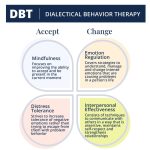
A: It’s a great question. Cognitive Behavioral Therapy (CBT) worksheets often focus on identifying and challenging distorted thoughts (change). DBT mindfulness handouts, on the other hand, emphasize accepting and observing thoughts and feelings without immediately trying to change them (acceptance). This acceptance piece is crucial; it creates the stable foundation from which change can happen. DBT skillfully holds both acceptance and change in balance.
Q: What if I can’t stop judging my thoughts?
A: This is completely normal and expected. The skill isn’t to never have a judgment; it’s to notice the judgment non-judgmentally. When you catch yourself labeling a thought as “stupid” or “bad,” simply note it: “Ah, there’s a judgment.” Then, gently return your focus to observing and describing. Every time you do this, you strengthen your mindfulness muscle.
Getting Started: Your Action Plan for Using DBT Mindfulness Skills Today
You don’t need to be in a crisis to start building these skills. In fact, it’s best to practice when you’re calm. Using dbt mindfulness handouts as a guide can provide the structure you need to make these skills a habit.
Pick One Skill to Start. Don’t overwhelm yourself. For the next week, focus only on practicing the “Observe” skill or the “Non-judgmentally” skill.
Choose a Routine Activity. Practice being one-mindful during a low-stakes moment you already do every day, like brushing your teeth or washing a dish. Notice the sensations without distraction.
Label Your States of Mind. Throughout the day, ask yourself: “Am I in Emotional Mind, Reasonable Mind, or Wise Mind right now?” Just the act of labeling builds awareness.
Use a Handout as a Map. Find a basic “What” and “How” skills worksheet online or in a DBT workbook. Fill it out once a day to track your experiences and reflect on your practice. Repetition is what turns knowledge into an embodied skill.
This practice isn’t about achieving a perfect state of zen. It’s about building the resilience to sit with discomfort, the clarity to see your choices, and the wisdom to act effectively in service of the life you want to live.
I am a writer specializing in health and lifestyle, committed to delivering well-researched, engaging, and insightful content. With a keen eye for trends and a deep understanding of health, presenting and exploring topics ranging from nutrition and mental health to sustainable living. This writing is solely intended to educate, inspire, and empower readers to live a healthier, more balanced life.