So you’ve decided to try meditation. You sit down, close your eyes, and wait for the promised calm to arrive. Instead, you get a flood of thoughts: your grocery list, that awkward thing you said yesterday, a song stuck on repeat. It’s easy to wonder, what do you do during meditation, really? The common advice to “just clear your mind” feels impossible because the real work isn’t about forcing emptiness, but about giving your attention a gentle, consistent job to do.
This isn’t about wrestling your thoughts into submission. It’s about learning to guide your focus with kindness, one breath at a time.
At a Glance: Your Meditation Toolkit
The Goal Isn’t an Empty Mind: Learn why the real practice is noticing your thoughts and gently returning your focus.
Find Your Anchor: Discover five practical focal points—breath, mantra, visualization, body sensations, and loving-kindness—to ground your attention.
Step-by-Step Guidance: Get clear, actionable instructions for trying each technique today.
Handle Distractions with Grace: Understand how to treat mental wandering as part of the process, not a failure.
Start Small, Stay Consistent: Learn why a 3-minute daily practice is more powerful than a sporadic hour-long session.
Before we dive into the “doing,” let’s clear up the biggest misconception. Your brain is designed to think. It analyzes, remembers, plans, and worries. Trying to shut it off is like trying to stop your heart from beating; it’s counterproductive and stressful.
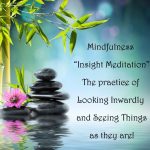
The goal of meditation is not to stop thinking. It’s to change your relationship with your thoughts.
Instead of getting swept away by every mental distraction, you use a focal point—an “anchor”—to keep you grounded in the present moment. When you notice your mind has drifted (and it will), the practice is simply to acknowledge it without judgment and gently guide your attention back to your anchor. This process of noticing and returning is the core exercise of meditation. It’s like a bicep curl for your attention muscle.
While this article focuses on the specific actions and anchors you can use, the thoughts that arise are a rich landscape of their own. For a deeper exploration of the mind’s inner chatter, our guide on What comes to mind when meditating? provides a broader framework.
Your Anchor in the Storm: 5 Gentle Focus Points
Think of your anchor as a home base for your awareness. It’s a neutral, simple point of focus that you can return to again and again. There is no single “best” anchor; the right one is the one that works for you. Here are five powerful and accessible options to explore.
1. The Breath: Your Body’s Natural Rhythm
The breath is the most common anchor for a reason: it’s always with you, it’s portable, and it’s free. Focusing on the physical sensation of breathing grounds you directly in the present moment. How to do it:
Find a comfortable posture, seated or lying down. Gently close your eyes or lower your gaze.
Bring your attention to your breath. Don’t try to change it. Just notice it.
Choose a specific spot to focus on. This could be the cool air entering your nostrils, the rise and fall of your chest, or the expansion of your belly. Pick one and stick with it.
Observe the full cycle. Feel the inhale, the brief pause after, the exhale, and the pause that follows.
When your mind wanders, and you realize you’re thinking about your email inbox, just note “thinking” and gently, kindly, guide your awareness back to the sensation of your breath.
Practical Tip: A Simple Breathing Technique
If your mind feels especially scattered, give it a simple rhythm to follow. Try “box breathing”:
Inhale slowly for a count of four.
Hold your breath for a count of four.
Exhale slowly for a count of four.
Hold the exhale for a count of four.
Repeat for a few cycles to settle your mind before returning to natural observation.
2. Mantras and Affirmations: Giving Your Mind a Job
For some people, a busy mind needs a simple task. A mantra—a word or phrase repeated silently—gives the thinking part of your brain something to do, allowing the rest of your awareness to settle.
The mantra can be a traditional one like “Om” or “Sat Nam,” or a simple affirmation in English that resonates with you. How to do it:
Choose a short, meaningful phrase. Good options include “I am peaceful,” “Let it be,” or even just the word “calm.”
Settle into your posture. As you begin to breathe, introduce the mantra silently in your mind.
Sync it with your breath. A natural rhythm is often helpful. For example, silently say “I am” on your inhale and “peaceful” on your exhale.
Repeat it gently. Don’t force it. Let the phrase be a soft, background hum for your attention.
When other thoughts arise, treat them like clouds passing in the sky. Acknowledge them and let your attention drift back to the sound of your mantra. Case Snippet: A busy executive found breath-watching made her more anxious. She switched to using the simple mantra “Here, now.” Repeating it silently gave her restless mind the anchor it needed to stop planning the next meeting and ground itself in the present.
3. Visualization: Painting a Picture of Calm
If you’re a visual person, creating a serene mental image can be a powerful way to focus your mind. This technique uses your imagination to build a calm and stable inner environment. How to do it:
Choose a simple, calming image. This could be a sunlit forest path, a placid mountain lake, a favorite peaceful beach, or even a simple ball of warm, golden light in your chest.
Build the scene with your senses. Don’t just see the beach; feel the warm sun on your skin. Hear the gentle lapping of the waves. Smell the salty air. The more sensory details you add, the more immersive the anchor becomes.
Hold the image gently. Your focus isn’t to perfect every detail, but to rest your awareness within this calming scene.
When you get distracted, simply return your attention to one of the sensory details of your visualization—the sound of the waves, the feeling of the sun.
4. Body Scan: Tuning Into Physical Sensations
A body scan is an excellent way to get out of your head and into your body. It involves systematically moving your attention through your body, simply noticing the physical sensations you find without judgment.
This is especially helpful if you feel disconnected from your body or are experiencing physical restlessness. How to do it:
Lie down comfortably if possible, or sit in a chair. Close your eyes.
Bring your awareness to the toes of your left foot. Just notice what’s there. Is there warmth? Tingling? Pressure from a sock? Or maybe nothing at all? There’s no right answer.
Slowly, move your attention up your body: from your toes to your foot, your ankle, your calf, your knee, and so on. Spend 15-20 seconds on each part.
Continue through your entire body: legs, torso, arms, hands, neck, and face.
Observe without judgment. If you notice tension in your shoulders, your job isn’t to fix it. It’s just to notice: “Ah, there is tension here.” By bringing gentle, non-judgmental awareness to it, you may find it softens on its own.
Unlike more neutral anchors, loving-kindness (or Metta) meditation is an active practice of generating feelings of goodwill and compassion. It’s a powerful antidote to self-criticism and judgment. How to do it:
Start with yourself. This is the most important step. With your eyes closed, silently repeat a few phrases directed at your own well-being. A traditional set is:
“May I be happy.”
“May I be healthy.”
“May I be safe.”
“May I live with ease.”
Extend to a loved one. Bring to mind a close friend or family member. Picture them clearly and repeat the phrases for them: “May you be happy. May you be healthy…”
Move to a neutral person. Think of someone you see regularly but don’t have strong feelings about—a barista, a postal worker. Offer them the same well wishes.
(Optional) Extend to a difficult person. If you feel ready, you can bring to mind someone with whom you have a difficult relationship. This can be challenging, so only do it if it feels right. Offer them the same phrases.
Finally, radiate outward. Extend the feelings of loving-kindness to your community, your country, and eventually to all living beings everywhere.
A Practical Playbook for Your First Sessions
Knowing the options is one thing; putting them into practice is another. Here’s how to set yourself up for success.
Choosing Your Starting Anchor
You don’t need to master all five techniques. Pick one that feels most accessible to you and stick with it for a week to see how it feels.
Anchor Type
Best For You If…
Might Be Challenging If…
Breath
You want a simple, universal starting point.
You have anxiety related to breathing or a respiratory condition.
Mantra
Your mind feels particularly “busy” or you like repetition.
You find repetitive phrases irritating or distracting.
Visualization
You’re a creative, visual thinker who enjoys imagination.
You struggle to conjure or hold mental images.
Body Scan
You want to feel more grounded and connected to your body.
You experience chronic pain or have bodily trauma.
Loving-Kindness
You want to cultivate more self-compassion and empathy.
You’re feeling particularly angry or self-critical.
The Art of the Gentle Return
The most important part of “what do you do during meditation” is how you handle distractions. Your mind will wander. That is not a failure; it is an opportunity.
Think of your attention as a puppy you’re training. When the puppy wanders off, you don’t yell at it. You gently take it by the scruff and lead it back to its spot. Do the same with your mind.
Every time you notice you’re lost in thought and gently guide your focus back to your anchor, you’ve just completed one successful repetition of the core meditation exercise. That return is the practice.
Your Meditation FAQ: Navigating Common Sticking Points
It’s normal to have questions as you start. Here are answers to some of the most common hurdles.
Q: Am I doing it wrong if my mind won’t stop thinking?
A: Absolutely not. You’re doing it right if you notice your mind is thinking. The goal isn’t to have zero thoughts. The goal is to be aware of the thinking process without getting lost in it. Each time you notice a thought and return to your anchor, you’re succeeding.
Q: How long should I meditate for?
A: Start smaller than you think. Three to five minutes a day is a fantastic start. According to researchers like Dr. Judson Brewer at Brown University, consistency is far more important than duration. A short daily practice builds a habit far more effectively than a long, sporadic one. You can always add more time as it starts to feel like a stable part of your routine.
Q: What if I feel restless, bored, or fall asleep?
A: These are all common experiences. Treat them as you would any other thought or sensation.
Restlessness: Notice it. “Ah, my body feels restless.” See if you can bring a body scan to the fidgety parts.
Boredom: Acknowledge it. “Boredom is here.” This is often a sign of resistance. Gently return to your anchor anyway.
Drowsiness: If you’re falling asleep, try sitting in a more upright posture, opening your eyes slightly, or practicing at a time of day when you’re more alert.
Q: Can I use music or a guided meditation app?
A: Yes, these can be incredibly helpful tools, especially for beginners. A guided meditation essentially provides the anchor for you, with the narrator’s voice guiding your attention. If you use music, opt for calming, ambient tracks without lyrics, as words can become another distraction. Experiment and see what supports your practice.
Your First Step Is the Only One That Matters
Ultimately, what you do during meditation is train your attention with intentionality and kindness. It’s a simple but not always easy practice of choosing an anchor and returning to it, again and again. You can’t fail as long as you’re willing to begin again.
Ready to start? Here’s a simple plan for your first week.
Choose One Anchor: Look at the table above and pick the one that resonates most with you right now. Don’t overthink it.
Set a Tiny Goal: Commit to just three minutes a day. Set a timer so you don’t have to worry about the time.
Notice, Don’t Judge: Your only job for those three minutes is to rest your attention on your chosen anchor. When your mind wanders, gently guide it back. That’s it. That’s the whole practice.
I am a writer specializing in health and lifestyle, committed to delivering well-researched, engaging, and insightful content. With a keen eye for trends and a deep understanding of health, presenting and exploring topics ranging from nutrition and mental health to sustainable living. This writing is solely intended to educate, inspire, and empower readers to live a healthier, more balanced life.